Whole-house low water pressure often comes from a municipal supply issue, a partly closed main valve, a failing regulator, corroded or restricted pipes, a hidden leak, or well-equipment trouble. Testing pressure at a hose bib and checking valves helps identify which factor applies to your home.
When every faucet in the house runs weak, the problem usually points to something bigger than one clogged fixture. It could involve the water coming into your home, a valve somewhere along the way, or equipment further down the line. A single weak faucet often has a simple, local cause. Pressure that’s low everywhere calls for a closer look at the whole system. This guide walks through the most common causes, how to tell whether the problem is really whole-house or just one fixture, safe checks you can do yourself, and when it’s time to bring in the water utility or a licensed plumber.
What Does Whole-House Low Water Pressure Mean?
A whole-house problem usually shows up in more than one place at once. Signs include weak flow from several faucets, weak showers in more than one bathroom, a toilet tank that refills slowly, a washing machine that takes longer to fill, and an outdoor faucet with a weak stream.
Pressure that drops noticeably when another fixture turns on is another common sign. So is a pattern where both hot and cold water seem weak, rather than just one or the other.
If only one faucet is weak while everything else runs fine, that usually points to a local fixture problem rather than something affecting the whole house. This article focuses on the system-wide kind of problem, not fixture-level fixes.
Is It Low Pressure or Low Water Flow?
These two terms get used interchangeably, but they describe different things.
Water Pressure
Pressure is the force pushing water through your pipes. It’s measured in PSI, which stands for pounds per square inch. Pressure exists even when no water is running, which is called static pressure. Pressure measured while water is actively flowing is called dynamic pressure.
Water Flow
Flow is the amount of water actually delivered over time, often measured in GPM, or gallons per minute. A home can have normal static pressure but still show poor flow once several fixtures demand water at the same time.
Restrictions like small pipes, long pipe runs, a clogged filter, or several fixtures running together can all reduce flow, even when the incoming pressure itself seems fine. In other words, low flow doesn’t automatically mean the incoming pressure is low.
First Check: Does the Problem Affect Every Fixture?
Before assuming a whole-house cause, walk through a few simple comparisons:
- Test more than one faucet in different rooms.
- Test fixtures on different floors, if your home has more than one level.
- Compare hot water pressure with cold water pressure.
- Test an outdoor faucet if you have one.
- Check pressure with just one fixture running.
- Check pressure again while two or three fixtures run at once.
- Ask whether the problem started suddenly or built up gradually.
- Ask a neighbor whether they’ve noticed the same thing.
- Note whether the pressure seems to change at certain times of day.
- Confirm whether your home uses municipal water or a private well.
Avoid opening up walls or forcing unfamiliar valves during this step. The goal here is simply to gather information.
Municipal Water-Supply Problems
If your home connects to a public water system, the supply itself can sometimes cause low pressure. Possible factors include water-main repairs nearby, an actual main break, nearby hydrant use, heavy firefighting demand, general utility maintenance, peak demand across the neighborhood, a temporary supply interruption, a change in pressure zone, high elevation in your area, a pressure problem at the utility level, or a restricted connection where your service line meets the main.
If neighbors are experiencing the same drop, or if the change happened suddenly without any changes on your end, contacting your water utility is a reasonable next step. It’s worth avoiding jumping to conclusions about the utility without some evidence pointing that way.
Peak Water Demand
Pressure or flow can dip during predictable high-use periods: morning routines, evening routines, lawn watering, several appliances running together, multiple showers at once, or general peak demand across the neighborhood.
Some pressure reduction during these times can be a normal part of how water systems work. A severe drop, though, especially one that makes fixtures nearly unusable, may point to plumbing that’s undersized or restricted somewhere in the system.
A Partially Closed Main Shutoff Valve
A main shutoff valve that’s partly closed, damaged, corroded, broken internally, installed incorrectly, or simply hard to operate can reduce flow throughout the home.
Gate Valve
Older homes sometimes use a gate valve, which can fail on the inside even when the handle still turns freely. A valve that looks fine from the outside may not be fully open internally.
Ball Valve
A ball valve’s handle is typically parallel with the pipe when fully open and turned crosswise when closed. If a valve feels stuck, don’t force it. Forcing a stuck or corroded valve can cause it to break.
Meter valves and curb stops are usually owned and controlled by the water utility, not the homeowner, so these shouldn’t be operated by a resident. If your main valve is stuck, leaking, damaged, or unfamiliar to you, a plumber can inspect and address it safely.
A Faulty Pressure-Reducing Valve
A pressure-reducing valve, also called a pressure regulator, controls how much of the incoming water pressure actually reaches your home’s plumbing. When it works correctly, it keeps pressure within a manageable range.
A regulator can fail in a few ways: incorrect adjustment, a worn internal spring, a damaged diaphragm, sediment buildup, internal corrosion, pressure that fluctuates instead of staying steady, pressure that’s too low downstream, pressure that creeps upward over time, unusual noise, or a failure that only shows up under demand.
Adjusting a regulator without first understanding what’s actually wrong can create excessive pressure or cause damage elsewhere in the system. Professional testing is a safer starting point than trial-and-error adjustment.
A Restricted Water Meter or Meter Valve
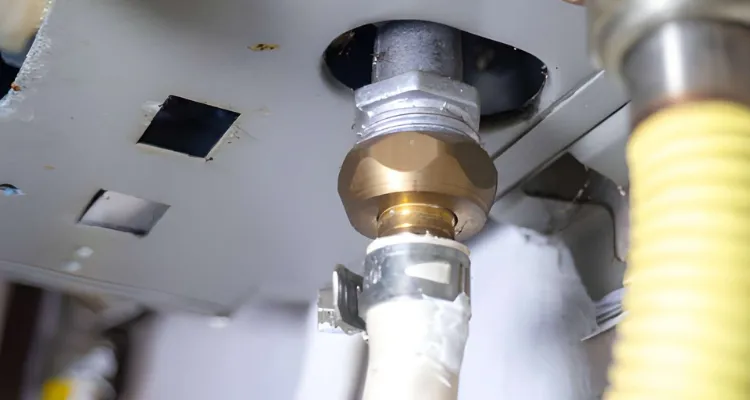
The area around your water meter can sometimes restrict flow. Possible causes include a partly closed valve near the meter, debris inside the meter, corrosion, a damaged meter, an undersized meter for the property’s needs, ongoing utility work, or a problem with the service line close to the meter.
Water meters and some of the valves around them are often utility property, not something a homeowner should take apart. If you suspect the meter area is involved, contact your utility or a licensed plumber rather than attempting to dismantle it yourself.
A Clogged Whole-House Water Filter
A dirty filter cartridge in a whole-house filtration system can reduce flow to every fixture downstream of it. This applies to sediment filters, carbon filters, and similar setups.
Relevant factors include how old the filter is, how much pressure drops across the filter as water passes through, whether the cartridge is the wrong size for the housing, whether the filter media has become clogged, the position of the housing valves, the bypass setting, and whether the unit was installed facing the correct direction.
Replacing a filter cartridge should follow the manufacturer’s instructions closely. Bypassing treatment equipment isn’t a good idea if doing so would let unsafe or untreated water reach your fixtures.
Water Softener Restrictions
A water softener can also reduce flow throughout the house under certain conditions: a blocked control valve, fouled resin or media inside the tank, an undersized unit for the home’s demand, a bypass valve that’s partly closed, sediment entering the system, failed internal parts, or restricted connections at installation.
Switching the softener into bypass mode can sometimes help you figure out whether it’s the source of the problem, but only when the manufacturer’s instructions support doing this and you understand how the controls work. Repairing internal softener components isn’t something to attempt without the right knowledge.
Corroded or Clogged Pipes
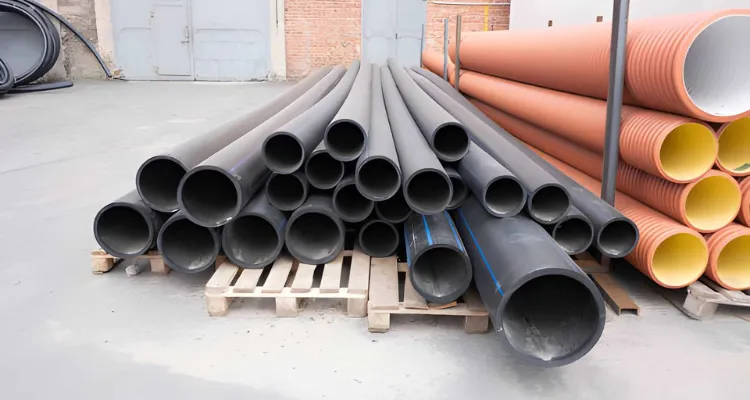
Pipes can narrow from the inside over the years. This is especially common with galvanized steel pipe, which can develop internal rust that reduces the usable diameter. Mineral scale, sediment, aging fittings, and restrictive elbows can all add to the problem.
Signs of this kind of narrowing include uneven flow between fixtures, pressure that has gotten worse gradually rather than suddenly, discolored water, and flow that drops noticeably once demand increases.
Supply pipes generally aren’t as easy to clean out as drain lines, and cleaning isn’t always a realistic option. When corrosion is severe, replacing or rerouting the affected section is often the more practical path. Not every old pipe needs replacing, but pipe age combined with these symptoms is worth having checked.
Undersized Supply Pipes
Sometimes the pipes were simply never sized for the home’s current demand. This can happen with the service-line diameter, the size of the main trunk line, the size of branch lines feeding individual fixtures, unusually long pipe runs, multiple floors drawing from the same supply, added bathrooms, home additions, irrigation connections tied into the same line, and pressure lost through excess fittings.
A home like this can seem to have fine pressure when only one faucet runs, then show a sharp drop the moment a second or third fixture opens. This pattern often points toward a sizing issue rather than a single failed part.
A Hidden Plumbing Leak
A hidden leak somewhere in the system can quietly reduce the pressure and flow available to your fixtures. Signs to watch for include the water meter continuing to move when every fixture in the house is off, damp walls, wet flooring, water use that’s higher than expected, unusual water sounds inside walls or under floors, musty odors, unusually soft ground outside, pooling water, a sudden change in pressure, a toilet that runs constantly, or signs of a leaking service line.
Not every leak causes a noticeable whole-house pressure drop. A small leak may go unnoticed for a long time even though it’s slowly wasting water. If you check the meter for signs of a leak, stay away from any standing water near electrical outlets or panels.
A Damaged or Restricted Service Line
The pipe connecting the water main or meter to your house, known as the service line, can develop its own problems. These include leaks, corrosion, a crushed section, a kink, root damage, mineral buildup narrowing the interior, undersizing for current demand, a poor past repair, damage from nearby excavation, or shifting caused by ground movement.
Responsibility for the service line, and who’s allowed to work on it, varies depending on your location and local utility rules. Digging near a buried line or working close to other underground utilities isn’t something to take on without professional help.
Backflow Preventer or Check-Valve Problems
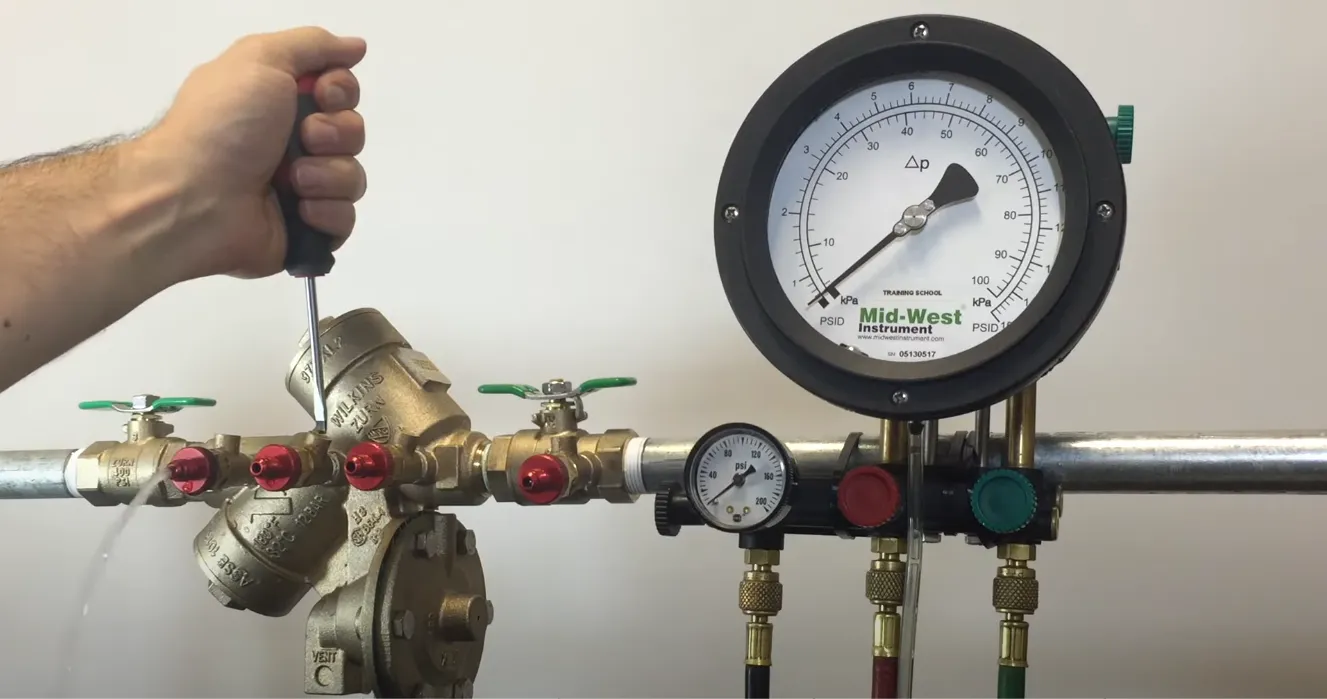
Some properties have a backflow-prevention device or check valve installed to keep water flowing in one direction only. These devices can restrict flow when internal parts fail, debris gets trapped inside, the device is undersized for the property, an associated valve is partly closed, required testing or servicing has lapsed, or the device was installed incorrectly.
Because these devices are often regulated, testing or repairing them typically falls to a qualified professional rather than a homeowner.
High Elevation or Multi-Story Plumbing
Water naturally loses some pressure as it travels upward. This matters more in certain situations: homes built on a hillside, upper floors of a multi-story building, tall buildings in general, long vertical pipe runs, properties near the edge of a utility’s pressure zone, and buildings that rely on booster pumps or pressure tanks to make up the difference.
Elevation can be a real factor, but it shouldn’t be assumed as the cause without an actual pressure test confirming it.
Shared Water-Service Problems
Duplexes, apartment buildings, condominiums, and some older properties sometimes share a single water-service line, meter, pressure regulator, shutoff valve, or overall supply capacity between multiple units.
In these setups, pressure can drop when several units draw water at the same time. If you live in a shared building and notice this pattern, it’s reasonable to bring the issue to your landlord, property manager, homeowners’ association, the utility, or a plumber, depending on who’s responsible for that part of the system.
Whole-House Low Water Pressure on a Private Well
Homes on a private well work differently from those on municipal water, since a well relies on its own pump and storage equipment rather than a public supply line.
Well Pump Problems
A well pump can develop several issues over time: weakening output as it ages, general wear, an electrical fault, a drop in the water level it’s pulling from, a clogged intake, short cycling on and off more than it should, an improperly sized pump for the home’s demand, or a failure in the pump’s control system. Electrical repair work on a well pump should go to a qualified professional.
Pressure Tank Problems
The pressure tank stores water under pressure to reduce how often the pump has to run. Problems here include a lost air charge inside the tank, a waterlogged tank, a damaged internal bladder, incorrect tank pressure, rapid cycling, unstable pressure readings, and reduced drawdown capacity, meaning the tank holds less usable water between pump cycles than it should.
Pressure Switch Problems
The pressure switch tells the pump when to start and stop. Trouble here can include worn electrical contacts, sediment blocking the switch, incorrect settings, an electrical fault, or pressure that fluctuates instead of holding steady. A qualified well professional or electrician is the right choice for diagnosing and repairing switch issues.
Low Well Yield
A well may simply not refill fast enough to keep up with demand. This can depend on seasonal changes in the water table, drought conditions, unusually heavy household use, irrigation demand, the well’s depth, the condition of the surrounding aquifer, and how much storage capacity the system has. A low-yield well doesn’t always mean a new well needs to be drilled; sometimes storage or usage adjustments help instead.
Why Pressure Drops When Several Fixtures Run
This comes down to dynamic pressure, meaning pressure measured while water is actively flowing, rather than static pressure measured at rest.
Several things can cause a bigger-than-expected drop under demand: undersized pipes, restricted or corroded pipes, a clogged filter, a weak municipal supply in your area, a partly closed valve, a failing regulator, an undersized meter, a weak well pump, or a pressure tank that’s too small for the household’s needs.
This is part of why testing under actual flow conditions matters. Static pressure alone can look perfectly normal even when the system struggles once real demand kicks in.
Why Only the Hot Water Pressure Is Low
This article focuses on whole-house pressure, so this section stays brief. If cold water pressure is normal but hot water pressure is weak, the cause is usually more localized. Possible reasons include a partly closed valve at the water heater, a restricted heater connection, sediment buildup inside the tank, a restricted hot-water line, a mixing valve issue, or a problem within a recirculation system.
When cold water pressure stays normal, this usually isn’t a true whole-house pressure problem, even though it can feel just as frustrating.
Why Pressure Changes at Different Times
Pressure that shifts throughout the day can point to a few different things: peak demand across the neighborhood, irrigation schedules running nearby, utility operations happening at certain hours, a well system recovering after heavy use, several fixtures in your own home running at once, nearby commercial water demand, a shift between pressure zones, a regulator that’s beginning to fail, or a well pump cycling on and off.
Keeping a simple record of when the problem happens, and what else is going on at the time, can make diagnosis easier for whoever eventually inspects the system.
How Water Pressure Is Tested
A professional can test several parts of the system to narrow down the cause. This typically includes a pressure gauge attached to a hose bib, a static-pressure reading taken with no water running, a dynamic-pressure reading taken while water flows, a flow test, pressure readings taken before and after a regulator, pressure readings before and after a filter, observation of the water meter, inspection of shutoff valves, testing of the service line, and a review of well-system gauges where applicable.
There’s no single PSI figure that counts as correct for every property. Local plumbing codes, the specific fixtures in the home, elevation, and overall building design all affect what a normal reading looks like for a given house.
Safe Checks Homeowners Can Perform
- Confirm that more than one fixture is affected.
- Compare hot and cold water pressure at the same fixture.
- Check whether neighbors are having the same issue.
- Look for any alerts posted by your local water utility.
- Note whether pressure seems to change at certain times of day.
- Check accessible valve handles gently, without forcing anything stuck.
- Review when your whole-house filter cartridge was last replaced.
- Check treatment-equipment bypass positions only if you’re already familiar with how they work.
- Look around for any visible signs of leaking.
- Observe the water meter with every fixture in the house turned off.
- Write down what you’re noticing and when it happens.
- Contact the water utility or a plumber based on what you find.
These checks can help narrow down where the problem sits, but they don’t replace a professional pressure test.
What Not to Do
- Don’t force a valve that feels stuck.
- Don’t operate a curb stop, since it’s typically utility property.
- Don’t dismantle a water meter.
- Don’t increase a regulator’s pressure setting without testing first.
- Don’t remove a backflow preventer on your own.
- Don’t bypass required water-treatment equipment if doing so risks unsafe water reaching your fixtures.
- Don’t attempt wiring work on a well pump.
- Don’t enter a flooded area near electrical outlets or panels.
- Don’t dig near a buried service line.
- Don’t assume higher pressure is always better; excessive pressure can damage fixtures, valves, appliances, and pipes.
- Don’t install a booster pump before understanding what’s actually causing the low pressure.
When to Contact the Water Utility
Reaching out to your water utility makes sense when neighbors report the same problem, the change happened suddenly, a nearby repair or main break has been reported, pressure seems low specifically near the meter, the meter or a utility-owned valve may be involved, there’s possible damage to the service line near public property, water looks discolored after utility work in the area, or pressure seems to shift across the whole neighborhood rather than just your home.
What the utility will ultimately investigate or repair depends on their own policies and the specific situation.
When to Call a Licensed Plumber
A plumber’s inspection is worth arranging when every fixture in the home shows weak pressure, pressure drops sharply once demand increases, the main valve appears damaged, a regulator may have failed, pipes show signs of corrosion, a hidden leak seems likely, a filter or softener appears to be restricting flow, the service line may be damaged, pressure behaves unpredictably, the cause still isn’t clear after basic checks, the home has a complex multi-story plumbing layout, a booster system is being considered, or pressure has become dangerously high or low.
A plumber can test pressure, flow, valves, regulators, treatment equipment, pipes, and the service line to pin down exactly what’s going on.
Can a Booster Pump Fix Low Water Pressure?
A booster pump may help in situations where the incoming pressure is consistently inadequate and local rules permit this kind of equipment. It shouldn’t be the first step, though.
Before considering a booster pump, it makes sense to rule out leaks, restrictions, closed valves, a failing regulator, utility limitations, pipe-sizing problems, or well-system issues. Boosting pressure into a system that’s restricted or damaged somewhere else can make existing problems worse instead of solving them.
Frequently Asked Questions
Why is the water pressure low in every faucet?
A system-wide problem like this can involve the incoming supply, the main shutoff valve, a pressure regulator, the service line, water-treatment equipment, a hidden leak, restricted pipes, or well equipment on properties that use a private well.
Can the city cause low water pressure?
Yes. Municipal maintenance, a main break, peak neighborhood demand, nearby hydrant use, elevation differences, or a change in pressure zone can all affect the pressure reaching your property from the public supply.
Can a partially closed valve reduce water pressure?
Yes. A valve that isn’t fully open can restrict flow throughout the entire house, and this often becomes more noticeable once more than one fixture is running at the same time.
Can a water-pressure regulator cause low pressure?
Yes. A regulator that’s worn, blocked, damaged, or set incorrectly can reduce the pressure that reaches your plumbing, or cause it to fluctuate unpredictably rather than staying steady.
Can old pipes cause low water pressure?
They can, particularly when internal corrosion or mineral buildup has narrowed the pipe over time. Age alone doesn’t confirm this, though; the pipe’s actual condition is what determines the impact.
Can a hidden leak cause low water pressure?
A larger leak, or one affecting the service line, may reduce pressure noticeably. A smaller leak elsewhere in the system might not create a pressure drop you can easily notice on your own.
Can a water softener cause low pressure?
Yes. A blocked control valve, fouled resin or media, an incorrectly set bypass valve, or a softener that’s undersized for the home’s demand can all restrict water flow to the rest of the house.
Can a clogged whole-house filter cause low pressure?
Yes. A dirty or clogged filter cartridge reduces flow to every fixture downstream of it, since all the household’s water has to pass through that filter first.
Why does water pressure drop when two faucets run?
This usually points to limited flow capacity somewhere in the system, whether from restricted or undersized pipes, supply limitations, or equipment that can’t keep up once demand increases.
What causes low pressure in a house with a well?
Possible causes include the well pump itself, the pressure tank, the pressure switch, the well’s overall yield, sediment in the system, or an electrical control issue affecting the pump.
Should I install a booster pump?
Diagnosis should come first. A booster pump won’t repair leaks, closed valves, a clogged filter, or corroded pipes, and installing one before understanding the actual cause can make problems worse.
Who should I call about low water pressure?
Contact your water utility when neighbors are affected or a supply-side issue seems likely. A licensed plumber should inspect problems that appear to originate inside your own property.
Conclusion
Whole-house low water pressure can start at several different points: the municipal supply, the meter, a valve, a pressure regulator, the pipes themselves, a filter or softener, the service line, or well equipment on properties with a private well. Testing more than one fixture helps confirm whether the problem is really system-wide, and static and dynamic pressure tests help narrow down where it’s coming from. Leaks and restrictions need to be addressed before adding pressure-boosting equipment.
If low water pressure affects your whole house, El Paso Plumbing can test the plumbing system and explain the repair options. Call (915) 285-0087 or request service online.