If you’re staring at a leaking pipe or a toilet that won’t stop running, the first question is usually not “how do I fix this.” It’s “how much is this going to cost me.”
That’s a fair question, and it doesn’t have one simple answer. Plumbing repair prices in El Paso depend on the type of repair, how hard the problem is to reach, what parts are needed, and whether the job involves anything as significant as a water line, sewer line, or slab leak.
This guide walks through what affects the price of common plumbing repairs, what’s usually included in a quote, when permits might apply, and how to get an estimate you can actually trust.
Plumbing Repair Costs in El Paso at a Glance
The table below uses general national cost data from established pricing sources, not confirmed El Paso job data. We’re showing it so you have a reasonable starting point, but treat every number here as a national reference range, not a local quote. Actual El Paso pricing can run lower or higher depending on the local market and the specific job.
| Plumbing repair | General national reference range | What the range may include | Main cost factors |
|---|---|---|---|
| Plumbing inspection or diagnostic visit | $50 to $200 service call fee; $75 to $150 per hour if billed hourly | Time on site to inspect and diagnose the problem | Access, time on site, whether testing equipment is needed |
| Faucet repair or replacement | $100 to $350 | Labor and standard parts | Part type, corrosion, fixture age, part availability |
| Toilet repair | $100 to $300 | Labor and common internal parts (flapper, fill valve, wax ring) | Type of failure (running toilet vs. leak at the floor), part cost |
| Drain cleaning | $150 to $400 for a single fixture; $200 to $800 for multiple fixtures or a main line | Cabling or snaking a standard clog | Blockage location, cabling vs. camera inspection, recurring clogs |
| Garbage disposal repair or replacement | $75 to $400 repair; $200 to $550 full replacement | Labor and, for replacement, a standard unit | Jam vs. failed unit, unit size, electrical involvement |
| Water heater repair | $150 to $700 for a tank unit; $300 to $1,300 for tankless | Labor and a single failed part | Gas vs. electric vs. tankless, tank condition, part cost |
| Visible pipe leak repair | $150 to $500 for an easily reached pipe; $500 to $5,000+ if it’s inside a wall | Labor and pipe section or fitting | Pipe material, location, access |
| Hidden leak detection | $150 to $400 | Inspection and testing to locate the source | Inspection method, system size, access limitations |
| Slab leak repair | $500 to $4,000+, more if concrete must be opened and repoured | Detection, access, and pipe repair | Leak location, concrete or flooring access, repair vs. reroute |
| Main water line repair | $400 to $1,500 for a section repair | Labor and pipe material for the repaired section | Pipe depth and material, excavation, landscaping, permits |
| Sewer line repair | $1,000 to $5,000+, depending on scope | Inspection, access, and pipe repair | Blockage vs. damaged pipe, depth, access, permits |
| Emergency plumbing visit | $150 to $400 emergency call-out fee, often on top of standard repair pricing | Immediate dispatch and diagnosis | Time of day, dispatch urgency, temporary vs. permanent repair |
These ranges are planning estimates, not quotes, and they reflect general U.S. pricing data rather than a number specific to El Paso. The exact cost depends on the problem, access, parts, labor, permits, and other conditions at your property.
We’re showing national reference ranges here instead of a confirmed local average because we want this page to stay honest about where the numbers come from. Once real, current El Paso job data is reviewed, this table should be updated with actual local ranges in place of the general figures above.
A price range for any repair usually needs to say what’s included, like labor and standard parts, and what’s excluded, like permits or drywall repair. A wide range isn’t a sign of vague pricing. It usually just means the job type covers a lot of different scenarios, from a quick part swap to a repair that needs real access work.
How Much Do Common Plumbing Repairs Cost?
Plumbing Inspection or Diagnostic Visit
A diagnostic visit covers the time a plumber spends inspecting the problem and identifying likely repair options. This is different from the repair itself.
Some companies apply the diagnostic fee toward the repair cost if you move forward with the work. Others charge it separately regardless of what happens next. Ask which policy applies before the visit.
Diagnosis can take longer when the problem is hidden, like a leak behind a wall or under a slab, since finding the source is part of the job. Some diagnostic visits may also include a testing charge if specialized equipment is needed.
Faucet Repair or Replacement
A faucet repair usually involves a worn cartridge, washer, or valve. If the part is standard and easy to reach, the job tends to stay simple.
The price can rise when the valve is corroded, the fixture itself is damaged, or the replacement part is hard to find, especially on an older or discontinued model. If full replacement makes more sense than repair, keep in mind that the faucet’s purchase price is usually separate from the labor to install it.
Toilet Repair
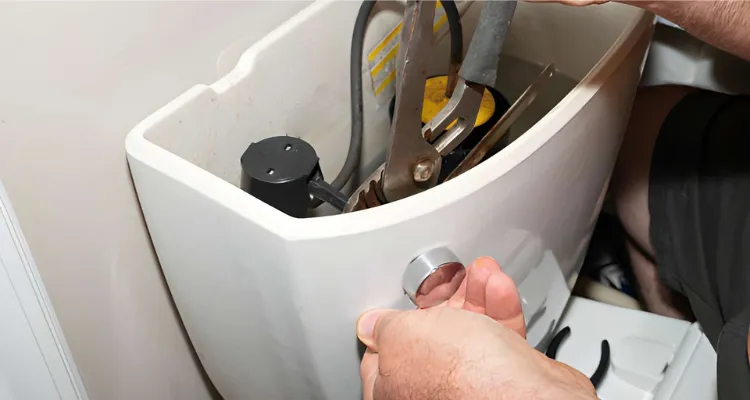
Toilet repairs cover a wide range of issues: a worn flapper, a bad fill valve, a leaking supply line, or failing internal tank parts.
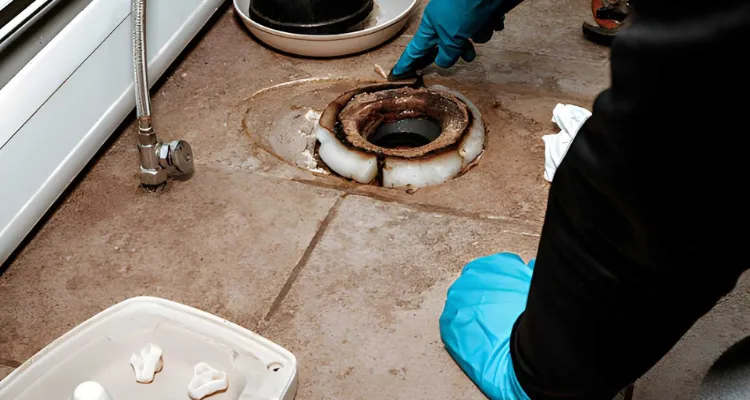
A running toilet and a toilet leaking at the floor are two different jobs. A running toilet is usually an internal tank part issue. A toilet leaking at the base often points to a worn wax seal, which requires removing the toilet to replace. Clogs that a plunger won’t clear may need cabling or, in some cases, point to a bigger drain line issue.
Drain Cleaning
Drain cleaning covers clogs in sinks, tubs, showers, and toilets, along with clearing a main drain line when needed.
Where the blockage sits matters. A clog close to a fixture is usually quicker to clear than one further down the line. Most drain cleaning uses a cable, though a camera inspection may be used to see what’s actually causing a recurring clog before deciding on a repair method. Drain cleaning and sewer line repair are not the same service. Drain cleaning clears a blockage. Sewer line repair addresses damage to the pipe itself.
Garbage Disposal Repair or Replacement
A jammed disposal is often a quick fix. A unit with a failed motor or a leaking connection may need full replacement.
Unit size and features affect the cost of a new disposal, separate from the labor to install it. If the problem turns out to be electrical rather than plumbing related, that work may need a qualified electrician instead.
Water Heater Repair
Water heater repairs can involve a heating element, a thermostat, a pressure relief valve, a leaking connection, or an ignition problem, and the type of unit changes the diagnosis.
Gas, electric, and tankless systems each have different components and failure points. A leaking tank is a different situation than a leaking fitting. Once the tank itself has corroded through, repair usually isn’t a lasting fix, and replacement becomes the more practical option. A plumber should explain which situation you’re in before recommending either path.
Pipe Leak Repair
Repairing a visible pipe, like one under a sink or in a basement, is usually more straightforward than repairing a concealed one behind a wall or below a floor.
Pipe material, the exact leak location, and how easy the shutoff is to reach all affect the job. Reaching a leak behind a wall or ceiling may require opening a section of drywall. Repairing the pipe itself may not include repairing the drywall, cabinet, paint, flooring, or tile around it, so ask specifically what’s covered.
Hidden Leak Detection
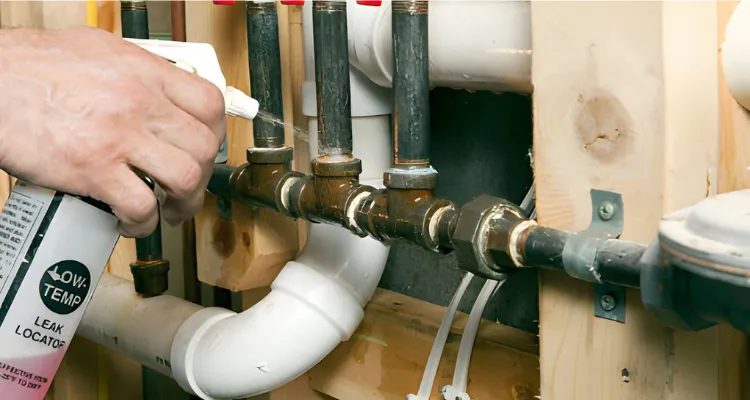
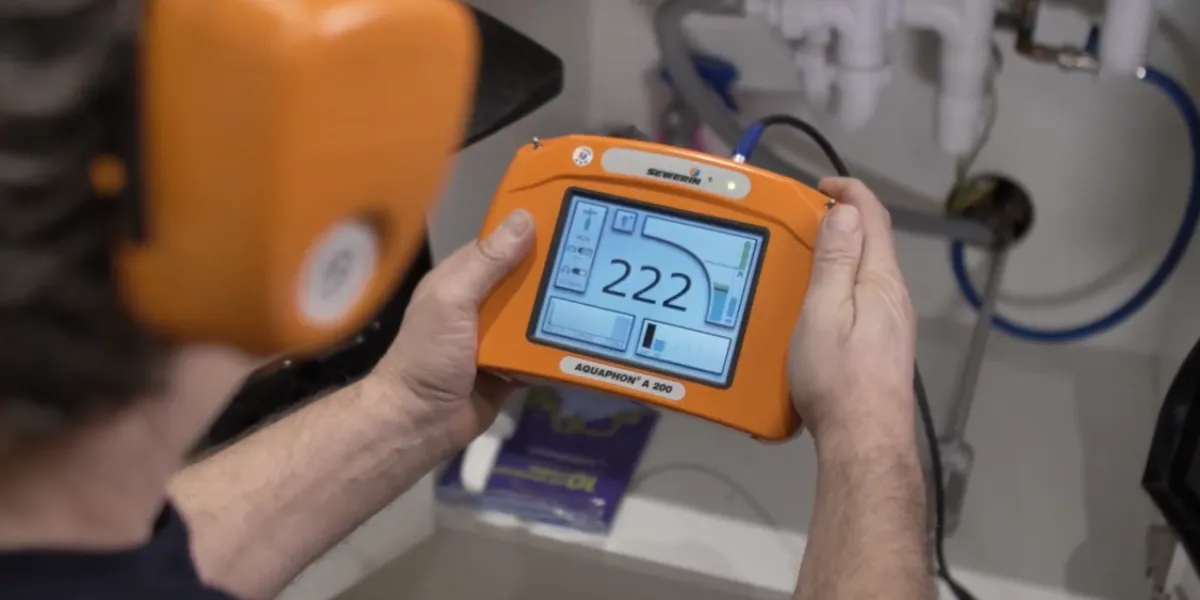
Hidden leak detection is the process of finding a leak that isn’t visible, often using meter testing, pressure testing, and isolating sections of the plumbing system to narrow down the source. Specialized detection tools may be used depending on the situation and the company’s available equipment. Even with the right tools, some leaks require opening a wall, floor, or outdoor surface to confirm the exact location, so detection can’t always avoid some access work entirely.
Slab Leak Repair
A slab leak is a leak in a water pipe below or within a home’s concrete foundation. It’s one of the more involved repairs a plumber handles, since finding and reaching the leak both take real effort.
Depending on what’s found, the repair might involve accessing the concrete directly above the leak, or rerouting the pipe through a different path entirely to avoid disturbing the slab at all. Flooring removal and restoration may be needed depending on the approach. Slab leak repair price ranges tend to be wider than a simple fixture repair, since the right method depends heavily on where the leak sits and how the home is built.
Main Water Line Repair
The main water line is the pipe that brings water from the utility connection to your home. A repair here often involves the pipe’s depth, its material, and how much excavation is needed to reach it.
If the line runs under landscaping, a sidewalk, or the street, that adds complexity and may involve permits. Depending on the pipe’s condition, a plumber may recommend a spot repair at the damaged section or a full line replacement.
Sewer Line Repair
Sewer line repair starts with figuring out whether the issue is a blockage or actual pipe damage, usually through inspection first. Pipe depth and access both affect the job significantly. Some situations may be suited to trenchless repair methods, when the company offers them and the pipe’s condition allows for it, though trenchless repair isn’t the right fit for every sewer problem. Permits and inspections often apply to sewer line work, and restoration of any disturbed landscaping or surfaces should be discussed as part of the estimate.
What Is Included in a Plumbing Repair Quote?
A plumbing quote can include several different pieces, and it helps to know what each one covers:
- Diagnosis of the problem
- Labor
- Standard parts
- Specialty or manufacturer specific parts
- Equipment use, when applicable
- Permit or inspection fees, when required
- Cleanup after the repair
- Disposal of old parts or materials
- Travel, in some cases
- Emergency or after hours charges, when applicable
- Surface restoration, like drywall or flooring
- Warranty coverage
Not every company includes all of these by default. Always ask what’s excluded from the number you’re given, not just what’s included.
It also helps to know the difference between a few common terms. An estimate is a planning figure based on the information available before an inspection. A quote is typically a firmer number based on an in-person look at the job. A service call fee covers the visit itself, separate from the repair. A work authorization is what you sign to approve the actual repair. A change order is used if the scope of work changes once the job is underway, often because of something found during the repair that wasn’t visible beforehand.
What Factors Change the Cost of Plumbing Repair?
The Type and Size of the Problem
Replacing a worn part inside a toilet tank is a different job than repairing a damaged section of underground pipe. Bigger scope generally means more labor and more materials.
How Easy the Problem Is to Reach
A leak under an open sink is quick to reach. A leak behind a finished wall, below flooring, under a concrete slab, or underground all take more time and more labor to access safely.
Parts and Material Quality
Standard parts are usually easier to source and less expensive than specialty, manufacturer specific, or discontinued parts. A more expensive part isn’t automatically the better choice. It depends on what actually fits and functions correctly for your fixture.
Pipe Material and Condition
Homes can have different types of supply and drain piping, and the material involved can affect repair method and cost. We’re not going to guess what material is in your home specifically. A plumber can confirm that during an inspection.
Permits and Inspections
Whether a permit is needed depends on the scope of the work and current City of El Paso requirements. Not every plumbing repair requires a permit, but larger work involving water lines, sewer lines, gas lines, or water heater installation is more likely to need one.
Scheduled Versus Emergency Service
Nights, weekends, holidays, and immediate dispatch situations may affect pricing differently than a scheduled daytime visit, depending on the company’s policy.
Additional Damage and Restoration
A plumber’s price for the plumbing repair itself may not include drywall, paint, cabinets, flooring, tile, concrete, landscaping, mold assessment, or full water damage restoration. Ask specifically which parts of the job each company handles, since this varies.
Does an Emergency Plumber Cost More?
Emergency plumbing situations can differ from scheduled repairs in a few ways: immediate dispatch, after hours labor, temporary stabilization to stop active damage, limited part availability outside normal business hours, and sometimes a return visit for the permanent repair once the right parts are on hand.
It helps to understand these as separate pieces: the emergency service charge itself, the diagnosis, any temporary repair to stop the damage, and the permanent repair that follows. Ask which of these apply to your situation.
Some situations call for immediate help regardless of cost concerns:
- Water flowing that will not stop
- A burst pipe
- Sewage entering the home
- Water near electrical equipment
- A rapidly leaking water heater
- Severe loss of water service
Stay away from standing water near electricity. Shut off the water only when the correct valve is safe to reach and you know how to use it.
Is It Better to Repair or Replace the Plumbing Fixture?
This decision usually comes down to a handful of practical factors: the fixture’s age, its current condition, how many times it’s already been repaired, whether parts are still available, how efficient it is compared to newer models, safety, remaining warranty coverage, the price difference between repair and replacement, and how likely another repair is in the near future.
A few quick examples show how this plays out. A faucet with one worn cartridge is usually worth repairing. A faucet with a corroded body and hard to find parts may be more practical to replace. A toilet with a single failed part is an easy repair. A toilet that’s cracked or has needed several repairs already may be a better candidate for replacement. A garbage disposal with a stuck flywheel can often be reset or repaired. One with a burned out motor usually needs replacing. A water heater with one failed part, like a thermostat, is often repairable if the tank itself is sound. A water heater with a leaking tank generally isn’t. A small section of damaged pipe can often be repaired directly. A pipe with widespread corrosion throughout the home may point toward a larger repiping conversation instead.
None of this means replacement or the cheapest option is automatically the right call. The best choice depends on your specific situation, and a plumber should walk through it with you rather than push one option by default.
Could a Plumbing Repair Require a Permit in El Paso?
Plumbing work in Texas is regulated by the Texas State Board of Plumbing Examiners, and plumbers operating in El Paso are also required to register with the City under the El Paso City Code. Whether a specific repair needs a permit depends on the scope of the work.
A basic fixture repair, like fixing a faucet or a running toilet, is generally treated differently than work involving moving plumbing, replacing major piping, water line work, sewer line work, water heater installation, gas related work, or anything touching walls, concrete, sidewalks, or public right of way areas.
When a permit does apply, that cost should be shown separately in your estimate rather than folded into the general repair price.
How to Get an Accurate Plumbing Repair Estimate
- Describe the problem as clearly as you can.
- Explain when it started and whether it’s gotten worse.
- Share photos if the company accepts them ahead of the visit.
- Report any water stains, unusual sounds, odors, or pressure changes you’ve noticed.
- Ask whether an in-person inspection is required for an accurate price.
- Request a written estimate rather than a verbal one.
- Ask exactly what the price includes.
- Ask what could change the price once work begins.
- Ask whether permits or inspections may apply to your job.
- Confirm what warranty, if any, applies to the repair.
- Confirm whether cleanup and any restoration work are included.
- Get approval for any additional work in writing before it starts.
A phone estimate is often limited when the cause of the problem isn’t known yet. A responsible plumber generally can’t give a final price for a hidden problem without seeing it first.
Questions to Ask Before Hiring an El Paso Plumber
- Are you properly licensed for this type of work?
- Is your business registered where required?
- Is there a diagnostic or service call fee?
- Will that fee be applied to the repair if I move forward?
- Is the estimate provided in writing?
- Does the price include both labor and parts?
- Could the price change once work starts, and under what circumstances?
- How do you handle unexpected work discovered mid job?
- Is a permit required for this repair?
- Who is responsible for obtaining the permit?
- Does the price include cleanup?
- Does it include wall, floor, or concrete repair, if needed?
- What warranty applies to the completed work?
- When is payment due?
How to Save Money Without Choosing an Unsafe Repair
- Address leaks as soon as you notice them, rather than letting them continue wasting water.
- Compare the full scope of each quote you receive, not just the bottom line number.
- Ask whether both repair and replacement are realistic options for your situation.
- Keep fixtures and access panels reasonably accessible.
- Avoid covering a leak with a cosmetic fix instead of an actual repair.
- Schedule non emergency work during regular business hours when it’s safe to wait.
- Keep up with basic maintenance on toilets, drains, water heaters, and appliance connections.
- Keep records of past plumbing repairs for your own reference.
- Know where your home’s main shutoff valve is located before you need it.
None of this means putting off an active leak, a sewer backup, a suspected gas issue, or an electrical hazard to save money. Those situations call for prompt attention regardless of cost.
Will Insurance or El Paso Water Pay for Plumbing Repairs?
Whether homeowners insurance covers a plumbing repair depends on your specific policy and what caused the damage. Many policies treat the pipe repair itself differently than the resulting water damage, so it’s worth contacting your insurer directly for a coverage decision rather than assuming either way.
A plumber isn’t in a position to promise insurance approval, since that decision belongs to your insurance company. Separately, El Paso Water may offer leak related billing assistance or adjustment programs for qualifying situations, but these programs have their own eligibility rules and are not the same as paying for the plumbing repair itself.
When to Call a Plumber
Professional help is worth calling in when the source of a problem is unknown, water won’t stop flowing, a leak is behind a wall or below a floor, water pressure has changed throughout the home, a drain keeps backing up, a water heater is leaking, your meter shows water use you can’t explain, the repair may require a permit, or you simply can’t complete the work safely yourself.
For an accurate plumbing repair estimate in El Paso, El Paso Plumbing can inspect the problem, explain your options, and provide a written price. Call (915) 285-0087 or request service online at https://www.elpasoplumbing.net/.
Frequently Asked Questions
How much does a plumber charge for a service call in El Paso? This visit typically covers the plumber’s time to inspect the problem and identify likely repair options. Ask whether the fee is applied toward the repair cost if you decide to move forward with the work.
Do plumbers charge by the hour or by the job? Both methods exist. Hourly pricing charges for the actual time spent on the job, while flat rate pricing sets one price for a clearly defined repair regardless of how long it takes. Neither method is automatically better. It depends on the type of job and how predictable the scope is.
Why are plumbing repair price ranges so wide? A single repair category can cover very different situations. A faucet repair with an easy to reach part costs far less than one with a corroded valve and a hard to find replacement. Access, parts, diagnosis time, permits, timing, and any needed restoration all add variation.
Can a plumber give me an exact price over the phone? Sometimes, for a very simple, well described job. For anything involving a hidden leak, an unknown cause, or significant access work, an in-person inspection is usually needed before a firm price can be given.
Does a plumbing quote include parts and labor? It depends on the company. Some quotes bundle labor and standard parts into one number, while others itemize them separately. Always ask for a written breakdown so you know exactly what’s included before approving the work.
Does emergency plumbing cost more? In general, emergency visits can involve different costs than scheduled repairs due to after hours labor and immediate dispatch, though policies vary by company.
Do I need a permit for a plumbing repair in El Paso? It depends on the scope of the work. A basic fixture repair is typically treated differently than water line, sewer line, or gas related work. Check current City of El Paso requirements for your specific project before starting.
Is it cheaper to repair or replace a plumbing fixture? It depends on the fixture’s age, condition, repair history, and the cost difference between fixing it and replacing it. A single worn part is usually cheaper to repair, while a fixture with recurring problems or major damage often makes more sense to replace.
Does homeowners insurance cover plumbing repairs? It depends on your specific policy and what caused the damage. Contact your insurance provider directly for a coverage decision, since a plumber cannot make that determination or guarantee approval on your behalf.
Can a high water bill help me find a hidden leak? An unusually high water bill can be a warning sign that water is being used somewhere you’re not aware of, but it doesn’t identify the leak’s location on its own. A meter check or professional leak detection is needed to narrow down where the water is going.