A water heater problem must be matched to the heater type, the exact symptom, and the affected component before repair begins. Gas storage, electric storage, tankless, and heat pump units fail in different ways. The model and serial number locate the correct manual for that unit. Some checks, such as confirming power or reading an error code, do not require opening the unit. Gas, electricity, combustion, venting, and water pressure create real hazards during troubleshooting, and a leak through the tank wall usually means the tank has failed and needs replacement rather than repair. This article covers diagnosis, safe checks, and the point where professional service becomes necessary.
What Type of Water Heater Do You Have?
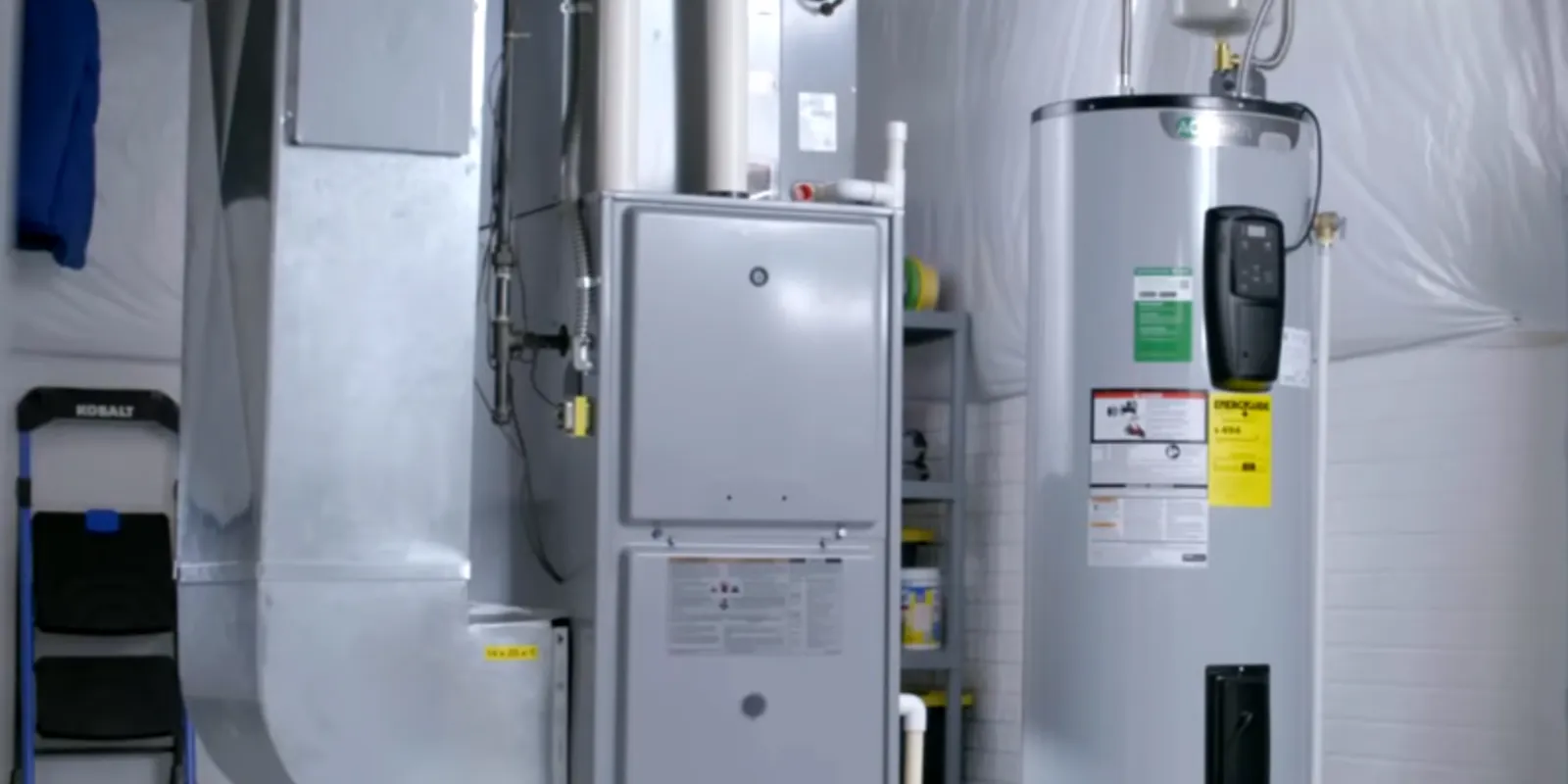
The heater type is confirmed by reading the data plate, which lists the model number, serial number, fuel type, and tank capacity. Common types include the gas storage water heater, electric storage water heater, tankless gas water heater, tankless electric water heater, heat pump water heater, power vent unit, direct vent unit, and condensing unit.
The data plate is mounted on the tank or control panel and shows the manufacturer name, electrical rating or gas input, and tank capacity. The installation and service manual for that exact model controls every troubleshooting step that follows.
Which Water Heater Checks Are Safe Before Repair?
A homeowner can safely confirm the symptom, check the breaker position, read an error code, and check for visible water before requesting repair.
- Confirm the exact symptom, and whether it affects one fixture or all.
- Compare hot and cold flow at the same fixture.
- Check the base of the unit for visible water.
- Check the breaker position and gas control display without opening panels.
- Read any error code and confirm the current setting.
- Check whether vacation or standby mode is active.
- Check for a blocked air intake or nearby combustibles.
- Check an accessible tankless inlet filter only if the manual permits it.
- Check whether a carbon monoxide alarm has activated.
- Locate the model manual and record the serial number.
Opening a burner chamber or testing live wiring requires qualified skill.
Which Warning Signs Require Immediate Action?
A gas odor, a carbon monoxide alarm, sparking wires, or water spraying from the tank all require the homeowner to stop use and act immediately.
| Warning sign | Immediate action |
|---|---|
| Gas odor | Leave the building, call the gas utility |
| Carbon monoxide alarm | Leave the building, call emergency services |
| Soot, melted wiring, or a burning smell | Turn off the unit, avoid contact, request inspection |
| Breaker trips repeatedly | Stop resetting it, call an electrician |
| Water near electrical parts or a flooded equipment area | Stay away, shut off power and water if safe |
| Water spraying from the tank or a tank wall leak | Shut off water and power, plan replacement |
| Relief valve releasing continuously | Do not block it, call for service |
| Bulging tank or damaged vent | Stop use, request inspection |
| Flame rollout or scalding water | Stop use, request service |
Leave the building immediately for a gas odor or carbon monoxide alarm, and avoid switches, flames, or electrical devices near a suspected leak. Never cap or block a relief valve.
Why Does the Water Heater Produce No Hot Water?
No hot water points to a power, gas, ignition, or control failure, and the exact cause depends on heater type.
Why Does a Gas Water Heater Produce No Hot Water?
A gas water heater produces no hot water when the gas supply, pilot, thermocouple, thermopile, flame sensor, or gas control fails. A pilot outage or a flammable vapor sensor lockout often shows as an error code, and opening the burner chamber requires a qualified gas technician.
Why Does an Electric Water Heater Produce No Hot Water?
An electric water heater produces no hot water when power, the high limit switch, a thermostat, or a heating element fails. A tripped breaker, a loose connection, or incorrect voltage can also cause failure. Live voltage testing requires a qualified electrician.
Why Does a Tankless Water Heater Produce No Hot Water?
A tankless water heater produces no hot water when it lacks power, gas, or sufficient water flow, or when an error code locks out the unit. A closed valve, a clogged filter, scale buildup, or a flow sensor failure can each restrict operation.
Why Does a Heat Pump Water Heater Produce No Hot Water?
A heat pump water heater produces no hot water when it loses power, sits in a restricted operating mode, or has a compressor, fan, or backup element fault. Low ambient temperature or a clogged air filter can also reduce heat transfer. Refrigerant repair requires a qualified technician.
Why Is the Water Only Lukewarm?
Lukewarm water points to reduced heating output, a control fault, or mixing before the water reaches the fixture. A low thermostat setting, a failed lower element, a broken dip tube, or a faulty mixing valve can each let cold water mix into the hot supply, while high simultaneous demand or scale in a tankless heat exchanger can exceed capacity. Testing temperature at the tank outlet versus the fixture separates low heater output from fixture-level mixing.
Why Does Hot Water Run Out Quickly?
Hot water runs out quickly when tank capacity, heating recovery, or usable volume cannot match household demand. Simultaneous fixture use, a failed lower element, a broken dip tube, or sediment at the tank bottom all reduce usable volume. In a tankless unit, flow above rated capacity reduces achievable temperature rise.
| Symptom | Possible cause | Useful check | Professional action |
|---|---|---|---|
| Runs out at one fixture | Local mixing or valve issue | Compare tank and fixture temperature | Fixture or valve repair |
| Runs out at all fixtures | Reduced capacity or sediment | Check thermostat and unit age | Element, thermostat, or flush service |
| Tankless drops under high flow | Flow exceeds unit capacity | Count fixtures running at once | Capacity evaluation |
| Gradual decline over months | Sediment or scale buildup | Note change in recovery time | Descaling or flush service |
Why Is the Water Too Hot?
Water becomes too hot when the thermostat, gas control, temperature sensor, or mixing valve is set incorrectly or has failed. According to the United States Consumer Product Safety Commission, water at 140 degrees Fahrenheit creates a greater scald risk than water at 120 degrees Fahrenheit, though household needs and any bacterial control plan may affect the correct setting. Testing or adjusting a gas control or an energized thermostat requires a qualified technician.
Why Is the Water Heater Leaking?
A water heater leaks from a top connection, a bottom connection, the relief valve, or the tank body, and the location determines whether repair is possible.
Why Does Water Leak From the Top?
Top leaks usually come from the cold inlet, hot outlet, or a fitting near the top of the tank, such as a loose flexible connector, a failed dielectric fitting, or a leaking anode port. These connection leaks are often repairable.
Why Does Water Leak From the Bottom?
Bottom leaks often come from the drain valve, a tank seam, or internal tank corrosion, though condensation or water traveling down the outer jacket can also collect at the base. Water escaping directly from the tank body usually means the tank has failed and needs replacement.
Why Does the Relief Valve Release Water?
The relief valve releases water when internal pressure or temperature exceeds a safe limit, often from excess temperature, thermal expansion, a failed expansion tank, or debris inside the valve. The valve must never be capped, plugged, or isolated from the system.
Is the Water a Leak or Condensation?
Condensation forms when cold water or humid air meets a cool tank surface, while a true leak releases water continuously from a fitting or the tank body. A professional traces the water to its source to tell the two apart.
Why Does the Water Heater Make Noise?
Water heater noise usually comes from sediment, scale, condensation, water hammer, or mechanical components inside a tankless or heat pump unit.
Why Does the Tank Pop or Rumble?
Popping and rumbling come from sediment or scale trapping water at the tank bottom, which then boils and escapes through the deposits.
Why Does the Heater Hiss?
Hissing usually comes from condensation, water on a hot surface, or a small leak releasing pressure.
Why Does the Heater Hammer or Bang?
Hammering comes from water hammer, a rapid valve closure that sends a pressure wave through the pipes, worsened by a loose pipe or a failed expansion tank.
Why Does a Tankless Heater Whine or Vibrate?
Whining or vibration in a tankless unit usually comes from the fan, pump, gas pressure, scale, or a loose panel. Combustion related noise requires professional inspection.
Why Does the Pilot Light Keep Going Out?
A pilot light goes out repeatedly when the thermocouple, thermopile, gas supply, draft, or gas control fails to maintain a stable flame. A dirty pilot opening or poor draft can also disrupt the flame. Repeated pilot loss requires diagnosis by a qualified gas technician rather than repeated relighting.
Why Does the Breaker Keep Tripping?
A breaker trips repeatedly when a shorted element, damaged wire, wet electrical part, or loose connection creates excess current draw. A failed thermostat or a control board fault can produce the same result. Repeated trips indicate an electrical fault, so do not keep resetting the breaker.
Why Does Hot Water Smell Bad?
A sulfur smell usually points to hydrogen sulfide from the water source or bacteria inside the tank, while a burned or metallic smell points to an electrical or corrosion problem.
Why Does Hot Water Smell Like Sulfur?
A sulfur smell usually comes from hydrogen sulfide produced by bacteria reacting with the anode inside the tank. Well water and storage temperature can influence this reaction. Removing the anode without another form of corrosion protection can shorten tank life.
Why Does Hot Water Smell Burned or Metallic?
A burned or metallic smell can come from electrical overheating, damaged wiring insulation, corrosion, or plumbing metals reacting with the water, and it requires shutting down the unit and requesting professional service.
Why Is Hot Water Discolored?
Discolored hot water usually comes from rust, sediment, a corroded tank, or disturbed pipe material, and sometimes from municipal work or well sediment. Discoloration in both hot and cold water often points outside the water heater; discoloration only in hot water often involves the tank or hot water piping.
Why Is Hot Water Pressure Low?
Low hot water pressure often comes from a closed valve, scale, sediment, or a clogged filter, heat exchanger, or check valve inside the heater or its piping. A whole house pressure problem unrelated to the heater can produce the same symptom.
How Do You Reset a Water Heater Safely?
A safe reset depends entirely on the heater type and exact model, since reset methods differ between gas, electric, and tankless units.
How Do You Reset an Electric Water Heater?
Many electric storage water heaters place a high limit reset button behind an access panel near the upper thermostat. Turn off the breaker first, and never repeatedly reset a tripping control.
How Do You Reset a Gas Water Heater?
Reset methods vary by the type of gas control installed, so use the lighting label and model manual rather than a universal method.
How Do You Reset a Tankless Water Heater?
Resetting a tankless water heater depends on its error code and control board. Clearing an error without fixing its cause can lead to repeated shutdowns.
Which Water Heater Repairs Can a Homeowner Complete?
**A homeowner can safely complete checks and minor tasks supported by the model manual, without opening gas, electrical, or pressure components.**1. Confirm power reaches the unit and the control setting. 2. Read the error code shown. 3. Replace an accessible air filter or clean an approved inlet screen. 4. Remove stored items from around the unit. 5. Check visible valves without forcing them. 6. Check for visible leaks around the base. 7. Reset a control once, only when the manual permits it. 8. Schedule professional service.
Which Repairs Require a Licensed Plumber?
A licensed plumber handles tank leaks, valve failures, pipe leaks, and component replacement on the water side of the system. This includes relief valve, expansion tank, drain valve, mixing valve, and dip tube replacement, water pressure correction, licensed gas line and venting work, tankless descaling, and full unit replacement.
Which Repairs Require an Electrician or Qualified Technician?
An electrician or qualified technician handles wiring faults, control board failures, and any live electrical testing. This includes repeated breaker trips, burned wiring, a failed disconnect, incorrect voltage, and a grounding fault. Licensing requirements vary by location.
How Does a Professional Diagnose a Water Heater?
A professional diagnoses a water heater through an ordered sequence that starts with identification and ends with a documented repair or replacement decision.
- Record the model and serial number, heater type, and reported symptom.
- Check visible safety conditions and review any error codes.
- Test water temperature, pressure, and flow.
- Check electrical and gas supply when qualified.
- Inspect combustion, venting, heating components, valves, scale, and sediment.
- Confirm tank integrity.
- Compare repair cost with replacement value.
- Explain findings and obtain approval before further work.
Should You Flush the Water Heater?
Flushing can remove loose sediment from a storage tank, but it cannot remove hardened scale, repair corrosion, or seal a tank leak. A damaged drain valve can begin leaking after a flush. Tankless and heat pump units follow separate model specific flushing instructions.
How Do You Know Whether the Heater Needs Repair or Replacement?
A serviceable component with a sound tank usually supports repair or replacement, while a leaking or heavily corroded tank usually supports replacement.
| Condition | Repair may be reasonable | Replacement may be reasonable |
|---|---|---|
| Tank leak or severe corrosion | No | Yes |
| Connection leak or failed thermostat/element | Yes | No |
| Gas control or burner fault | Yes | Sometimes, if parts are unavailable |
| Heat exchanger leak | Sometimes | Yes, in many cases |
| Repeated breakdown | Sometimes | Yes, when frequency is high |
| Obsolete parts or venting incompatibility | No | Yes |
| Poor capacity or high repair cost relative to value | No | Yes |
| Active warranty coverage | Yes | Sometimes |
Tank condition affects this decision more than age alone.
What Affects Water Heater Repair Cost?
Water heater repair cost depends on the heater type, the failed component, part availability, and the labor required to access the unit, so no single price applies to every situation. Additional factors include access difficulty, venting, gas or electrical work, existing water damage, permits, and disposal of the old unit. An inspection provides an accurate price for a specific unit.
What Water Heater Problems Cannot Be Fixed With a Reset?
A reset clears a control state, but it does not repair a leaking tank, a cracked heat exchanger, burned wiring, or any failed physical component. This includes a failed heating element or thermostat, a faulty gas control, a damaged relief valve, heavy corrosion, and a failed pump, fan, or compressor.
What Common Water Heater Repair Mistakes Create Risk?
Repeatedly resetting a safety control, bypassing a safety device, or capping a relief valve are among the most common mistakes that create real safety risk. Other risky habits include relighting without following the label, testing live wiring without training, and ignoring vent damage or a carbon monoxide alarm.
How Can You Prevent the Same Water Heater Problem?
Preventing a repeated water heater problem depends on following the manufacturer’s maintenance schedule and correcting the underlying cause, not just the symptom. Useful habits include a professional combustion and vent inspection, working carbon monoxide alarms, sediment management, tankless descaling, filter cleaning, and an annual professional inspection for fuel burning equipment.
Frequently Asked Questions
Why Is My Water Heater Not Producing Hot Water?
A water heater stops producing hot water when it loses power or gas, when ignition fails, or when a safety control shuts down heating. Gas and electric units commonly fail from a pilot outage, gas control failure, tripped breaker, or failed element. Tankless and heat pump units typically stop from low flow, a lockout code, or a compressor fault.
Can I Fix a Water Heater Myself?
A homeowner can safely complete checks such as confirming power, reading an error code, and checking for visible leaks, but gas, electrical, and pressure repairs require a qualified professional. The model manual identifies which tasks the manufacturer considers safe for homeowner service.
Where Is the Water Heater Reset Button?
Many electric storage water heaters place a high limit reset button behind an access panel near the upper thermostat, though exact placement varies by model. Turn off the breaker before opening any panel and confirm the procedure using the model manual.
Why Does My Water Heater Keep Tripping the Breaker?
A water heater trips a breaker repeatedly when a shorted element, damaged wire, wet component, or ground fault creates excess current. This indicates an electrical fault that needs an electrician, not continued resetting.
Why Does My Pilot Light Keep Going Out?
A pilot light goes out repeatedly when the thermocouple, thermopile, gas supply, draft, or gas control fails to sustain a stable flame. Repeated loss needs diagnosis from a qualified gas technician, not repeated relighting.
Can a Leaking Water Heater Be Repaired?
A connection leak at a fitting or valve is often repairable, but a leak through the tank wall itself usually means the tank has failed and needs replacement. A professional traces the water source before recommending either outcome.
Why Does My Water Heater Make a Popping Noise?
Popping noises usually come from sediment or mineral scale trapping water at the bottom of the tank, which then boils and escapes through the deposits. Severity and cause vary by water hardness and maintenance history.
Why Is My Hot Water Brown?
Brown hot water usually comes from rust, sediment, or a corroded tank, though pipe material and recent utility work can also contribute. Comparing hot and cold water from the same fixture helps identify whether the source is inside the heater or the surrounding plumbing.
Why Does My Hot Water Smell Like Rotten Eggs?
A rotten egg smell usually comes from hydrogen sulfide produced when bacteria react with the anode rod inside the tank. Well water and storage temperature can influence this reaction. Anode changes should follow professional guidance rather than unsupervised removal.
How Do I Know Whether the Heating Element Is Bad?
A failed heating element often produces no hot water, lukewarm water, or a tripped breaker, but confirming the exact fault requires electrical testing. Live voltage, current, and continuity testing require a qualified electrician using a multimeter.
Should I Reset My Water Heater?
A single reset following the model manual may be reasonable for a control that trips once, but a control that keeps tripping needs diagnosis instead of repeated resets. Continuing to reset a safety control without correcting the cause increases risk.
Does Flushing Fix a Water Heater?
Flushing can remove loose sediment, but it does not remove hardened scale, repair corrosion, or seal a tank leak. A flush only addresses sediment that has not yet bonded to the tank surface.
When Does a Water Heater Need Replacement?
A water heater generally needs replacement when the tank leaks, corrosion is severe, failures repeat frequently, parts are unavailable, or repair cost approaches the value of a new unit. Tank condition affects this decision more directly than age alone.
Who Repairs a Water Heater?
A licensed plumber typically repairs water side components, an electrician handles wiring and control faults, a qualified gas technician handles combustion and gas controls, and a manufacturer authorized service provider handles warranty repairs. The correct professional depends on which system within the unit has failed.