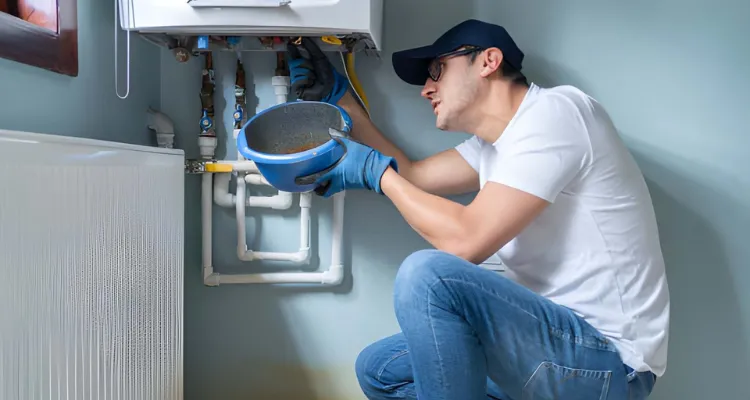
Turn off the power or gas to the water heater, shut off the cold water supply, and let the tank cool if it’s been recently used. Connect a garden hose to the drain valve at the bottom of the tank, run the other end to a floor drain or outside, open a hot water tap somewhere in the house to break the vacuum, then open the drain valve and let the tank empty. Flush with a few bursts of cold water until it runs clear, close the valve, refill the tank, and restore power or gas before using hot water again.
Draining a water heater is one of the simplest maintenance tasks a homeowner can do, but it’s also one that’s easy to get wrong in ways that cause a burn, a flood, or an airlock that leaves the heating element exposed. The actual valve-opening part takes minutes. Getting there safely, and refilling correctly afterward, is where most of the process actually happens.
This guide walks through a full, complete drain and flush of a standard gas or electric storage tank water heater, including the safety steps that matter most, the tools involved, how to tell the difference between a routine flush and a full drain before a repair or move, and what to do if the drain valve won’t cooperate. It also covers why draining matters, how often to do it, and how a tankless unit differs.
Why Would You Need to Drain a Water Heater?
There are a few different reasons to drain a tank, and they call for slightly different amounts of draining.
- Routine sediment flushing. Minerals and debris settle at the tank bottom over time. A yearly flush removes loose sediment before it hardens or interferes with heating.
- Before a repair. Replacing a heating element, thermostat, or drain valve on many units requires the tank to be at least partially emptied first.
- Before removing or relocating the unit. A full drain is required before disconnecting the water lines to replace or move a water heater.
- Before extended vacancy. Homes that will sit unused through a freeze risk are sometimes drained fully as a precaution.
- After suspected contamination or an extended power outage. Standing water that’s gone unheated and uncirculated for a long stretch is sometimes drained and refreshed as a precaution.
A routine flush and a full drain use the same basic steps, but a full drain also means shutting off the cold water supply at the main and leaving the tank completely empty rather than partially flushing and refilling.
What Tools Do You Need?
- A garden hose long enough to reach a floor drain, laundry sink, or the outdoors
- A bucket, in case a floor drain isn’t within reach of the hose
- A flathead screwdriver, since some drain valves are the screw-slot type rather than a hose-bib handle
- Work gloves, since water coming out of the tank can still be hot
- A flashlight, useful for checking the drain valve and sediment flow in a dim utility space
Most of these are simple household items, and no specialty parts are required for a standard drain.
How Do You Prepare the Water Heater Before Draining It?
Preparation means cutting the heat source, shutting off incoming water, and letting the tank cool before opening anything. Skipping this step is the most common way people get scalded during this task.
- Turn off the power or gas. On an electric water heater, switch off the breaker labeled for the unit at the main panel. On a gas water heater, turn the control valve knob to “pilot” or “off,” following the label on the unit, since this stops the burner from firing while you’re working.
- Let the water cool. If the tank has been actively heating recently, give it time, ideally a few hours or overnight, before draining. Water at the top of a full tank can be well above 120 degrees Fahrenheit.
- Shut off the cold water supply. Locate the shutoff valve on the cold water line feeding the top of the tank and close it. This stops new water from refilling the tank as it drains.
- Open a hot water tap. Choose a faucet elsewhere in the house and open the hot side. This lets air into the plumbing system as the tank drains, which keeps the tank from developing a vacuum that slows or stops the flow.
How Do You Connect and Position the Hose?
Attach a garden hose to the drain valve at the base of the tank and route the other end somewhere the water can safely go. The drain valve is usually a hose-bib style fitting near the floor on the front or side of the unit. Screw the hose on firmly by hand to avoid a loose connection that sprays water sideways once the valve opens. Run the other end of the hose to a floor drain, a laundry sink, or outside through a door or window, keeping it downhill from the tank whenever possible so gravity does the work.
How Do You Actually Drain the Tank?
Open the drain valve slowly and let gravity empty the tank through the hose. For a full drain, also open the pressure relief valve briefly first, which helps break any vacuum and speeds up the flow, then close it again once water starts moving steadily through the hose. Water may run out cloudy or discolored at first, which is normal and reflects loose sediment leaving the tank rather than a problem with the water heater itself. Let the tank empty completely if you’re doing a full drain before a repair or relocation.
How Do You Flush Sediment Out of the Tank?
With the tank empty or partially drained, briefly open the cold water supply valve in short bursts to stir up and flush out remaining sediment, then let it drain out through the hose again. Repeat this a few times until the water running out through the hose looks clear rather than cloudy or gritty. This step is what actually removes the sediment that a simple drain alone would leave sitting at the tank bottom. Heavily hardened deposits that have baked onto the tank surface over years may not fully clear with flushing alone.
What Do You Do If the Drain Valve Won’t Open or Is Clogged?
A slow, dripping, or completely blocked drain valve is usually caused by sediment plugging the opening from inside the tank. Try opening the valve fully rather than partially, since a partly open valve is more likely to clog. If flow is slow, briefly opening the pressure relief valve can help push sediment through. A valve that won’t open at all, or one that’s cracked or leaking around its base once opened, may need to be replaced rather than forced, since older plastic valves can break under pressure from a wrench or pliers.
How Do You Close the Valve and Refill the Tank?
Once the water runs clear and the flush is finished, close the drain valve, disconnect the hose, and reopen the cold water supply to refill the tank. Leave the hot water tap you opened earlier running until water flows out steadily with no sputtering, which confirms the tank has fully refilled and the air has cleared from the line. Close that tap once the flow is steady. Check the drain valve and the hose connection point for any drips before considering the job finished.
How Do You Restart the Water Heater Safely?
Restore power or gas only after the tank is completely full of water, since heating an empty or partially empty tank can damage the heating element or the tank itself. On an electric water heater, switch the breaker back on at the panel. On a gas water heater, follow the manufacturer’s instructions on the unit’s control valve to relight the pilot, then turn the valve back to the “on” or automatic setting. Give the tank time, often 30 to 60 minutes depending on its size and fuel type, before expecting a full tank of hot water at the tap.
How Often Should You Drain a Water Heater?
Most manufacturers recommend an annual flush as routine maintenance, though households with notably hard water may benefit from flushing more often, since sediment accumulates faster in mineral-heavy water. A full drain, beyond routine flushing, is only needed when a repair, relocation, or long-term shutdown calls for it, not on a fixed schedule.
Does Draining a Tankless Water Heater Work the Same Way?
No, a tankless water heater uses a different process, usually called flushing or descaling, since it doesn’t store standing water the way a tank unit does. Rather than opening a single drain valve, a tankless system typically has isolation valves and dedicated service ports that connect to a small pump and a flushing solution, often a vinegar or citric acid mix, circulated through the unit to dissolve mineral scale on the heat exchanger. Because this process involves the unit’s internal components rather than a simple gravity drain, many manufacturers recommend following the specific model’s manual closely, and some homeowners prefer to have this done by a professional.
What Should You Watch For While Draining?
- Hot water at the hose end, especially early in the drain, since tank water can still be significantly above tap temperature.
- Discolored or gritty water, which is expected sediment, not a sign of a leak or contamination.
- A hose that pops off the valve under pressure, which can spray hot water unexpectedly if it isn’t threaded on securely.
- **Water pooling around the base of the unit **, which can point to a leaking drain valve or a loose hose connection rather than normal draining.
When Should You Call a Professional Instead?
Call a plumber if the drain valve is stuck, cracked, or leaking once opened, if the tank shows signs of significant corrosion, or if you’re not confident locating the correct gas or electrical shutoff for your unit. A professional is also the safer choice if the water heater is due for a full replacement rather than a routine flush, If you’re deciding whether to repair or replace the unit, compare the costs in Water Heater Repair vs. Replacement Which Saves More Money? since disconnecting supply lines and a gas or electrical connection involves more than the drain valve itself.
Frequently Asked Questions
Do I need to turn off the power before draining a water heater? Yes. Turn off the breaker on an electric unit or switch the control valve to pilot or off on a gas unit before draining, so the burner or heating element doesn’t activate against a tank that’s partially or fully empty.
Is it normal for the water to look dirty when draining a water heater? Yes. Cloudy, rust-tinted, or gritty water at the start of a drain is typically loose sediment leaving the tank, and it should clear up as you flush with a few bursts of fresh water.
How long does it take to drain a water heater? A full drain of a standard residential tank typically takes 20 to 40 minutes, depending on tank size and how clogged the drain valve is with sediment, not counting time spent letting the water cool beforehand.
Can I drain a water heater without turning off the water supply? No. Leaving the cold water supply open while the drain valve is open means the tank keeps refilling as it drains, which can extend the flush significantly and defeats the purpose of a full drain.
Why won’t water come out of the drain valve? A clogged valve is usually caused by sediment blocking the opening from inside the tank. Opening the valve fully, and briefly opening the pressure relief valve to help push sediment through, often resolves a slow or blocked flow.
Do I need to relight the pilot light every time I drain a gas water heater? Only if the pilot went out during the process. Many gas control valves let you turn the dial to “pilot” rather than fully off, which keeps the pilot lit while preventing the burner from firing during the drain.