Water at the base of a water heater does not confirm where it came from. It can travel down from a connection near the top, form as condensation, or come from a valve, fitting, or the tank itself. Some sources can be repaired. Water escaping through the tank wall or bottom seam usually points to replacement. Gas, electricity, hot water, and pressure all create hazards near a wet heater, so the source must be traced before any repair decision is made.
What Does Water at the Bottom Mean?
Water at the base can come from several components, not only the tank. Sources include the drain valve, the tank wall, the bottom seam, the relief discharge pipe, a pipe connection, condensation, a condensate drain, or water traveling down the jacket from a leak higher up. Trace the source from the highest wet point, not from where the puddle collects.
What Must You Do First?
Keep people and pets away from the wet area and avoid standing water near electrical equipment.
- Keep people and pets away from the area.
- Avoid standing water near electrical parts.
- Check for a gas odor or a sounding carbon monoxide alarm.
- Identify the heater type and locate its model number.
- Shut off power from a dry location if water reached electrical parts.
- Shut off the water supply if the leak is active and safe to reach.
- Call for help if gas, carbon monoxide, or electrical danger exists.
Do not enter flooded areas near electrical panels. Do not search for a gas leak yourself.
How Can You Find Where the Water Starts?
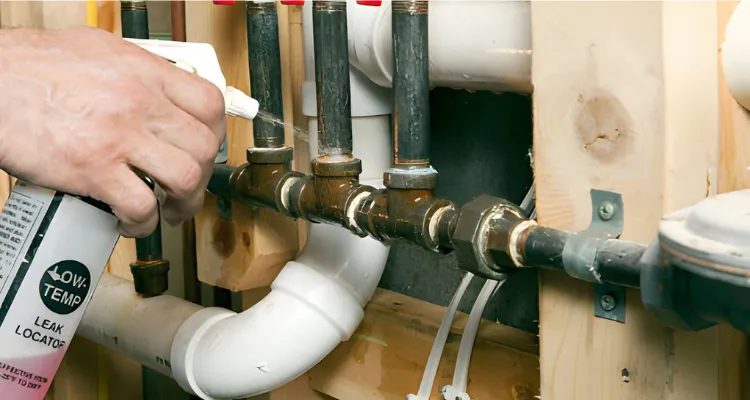
Trace the leak by drying the heater and inspecting the highest wet component first. Dry the exterior and drain pan, then place dry paper towels near likely sources, including top fittings, the relief valve, the drain valve, and the jacket seam. Follow rust streaks or mineral deposits, which mark the water’s path, and watch the heater during and after a heating cycle. Do not remove electrical panels or sealed combustion parts.
Can Water From the Top Appear at the Bottom?
Yes, water leaking from a top connection can travel down the jacket and appear at the base with no leak actually present there. Possible sources include the cold inlet, hot outlet, a flexible connector, the anode port, the expansion tank connection, or relief valve threads. Insulation inside the jacket can absorb water and release it lower down, delaying when the puddle appears.
Is the Bottom Water Condensation or a Leak?
Condensation usually appears only during or after a heating cycle and clears as the tank warms, while a true leak continues regardless of the cycle. Gas combustion produces water vapor, and heat pump units produce a managed condensate meant to drain through its own line. Persistent moisture or a growing puddle points to a leak.
| Observation | Condensation likely | Leak likely |
|---|---|---|
| Water appears only during burner operation | Yes | No |
| Water appears after heavy hot water use | Yes | No |
| Drops form on cold nearby pipes | Yes | No |
| Water stops once the tank fully warms | Yes | No |
| Water continues while the heater is idle | No | Yes |
| Rust streaks appear along the path | No | Yes |
| Mineral deposits build along a path | No | Yes |
| The puddle keeps growing | No | Yes |
| The water is warm or hot | No | Yes |
| The jacket stays wet after drying | No | Yes |
Not all bottom moisture is harmless. A puddle that persists after the tank warms needs further tracing.
Can a Leaking Drain Valve Cause Water at the Bottom?
Yes, since the drain valve sits near the tank base and empties water during flushing. Leaks can develop at the valve body, stem, threads, hose connection, or cap. Cracked plastic, trapped sediment, incomplete closure, and corrosion are common causes.
Why Does the Drain Valve Leak After Flushing?
Sediment often prevents the valve from closing fully, or the valve was damaged during flushing. A worn seal, a crack, damaged threads, or a valve unused for years can also cause this. Replacement requires cooling the tank, isolating the supply, and draining it in a controlled way.
Can You Tighten a Leaking Drain Valve?
Limited tightening may help only at an external threaded connection, and only if the valve itself is sound. Plastic valves can crack under force, and threads can strip if overtightened. A stem leak usually will not respond, and a leak in the tank behind the valve cannot be fixed by tightening it.
Can a Drain Valve Leak Be Repaired?
Often, depending on which part failed. A plumber may reseat the valve, replace the cap or the entire valve, or clear sediment. If the tank opening itself is damaged, tank replacement becomes necessary instead.
Can the Relief Valve Cause Water at the Bottom?
Yes, water discharged from the temperature and pressure relief valve can travel down the discharge pipe and collect near the base. This valve releases water automatically when temperature or pressure exceeds its rated limit and should not discharge in normal operation. Causes include thermal expansion, excess incoming pressure, a failed regulator or expansion tank, an excessive temperature setting, a defective valve, or incorrect installation. Never cap, plug, or isolate this valve.
How Can You Tell Whether the Relief Valve Is Discharging?
A wet discharge pipe or pooling water at its termination point is the clearest sign. Other signs include mineral residue on the pipe or hot water in the drain pan. A functioning valve releases a strong burst when fully activated, not a slow drip. Do not test it manually if that would create a hazard. Call a qualified plumber if discharge is occurring.
Can High Water Pressure Cause a Bottom Leak?
Yes, excess incoming pressure can stress the relief valve, drain valve, connectors, and fittings enough to cause a leak. Pressure is measured in pounds per square inch, or PSI, and a gauge on an outdoor spigot can confirm it. Acceptable ranges depend on local code and the heater’s rated limits, so do not adjust a pressure regulator before identifying the cause.
Can Thermal Expansion Cause Water Near the Bottom?
Yes, heated water expands, and in a closed plumbing system that expansion can raise pressure enough to trigger relief valve discharge. A closed system prevents water from moving back into the municipal supply as it heats, so pressure builds during each cycle instead. A correctly sized and charged expansion tank absorbs this volume, and a failed one loses that function.
Can a Leaking Pipe Connection Cause Water at the Base?
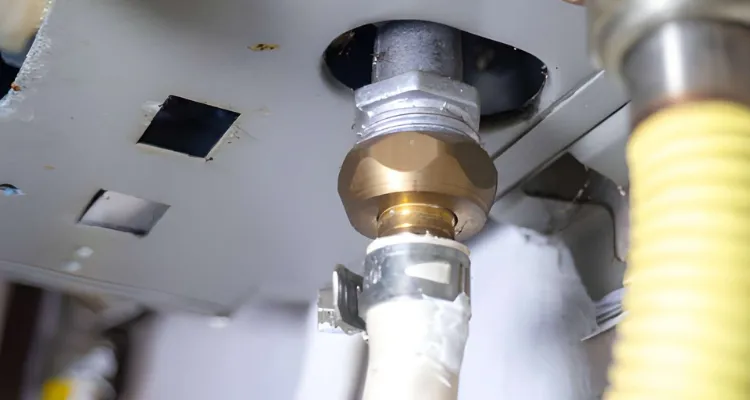
Yes, a leaking connection above the tank can send water down the shell to the base. Points to check include the cold inlet, hot outlet, flexible connector, dielectric nipple, unions, the recirculation line, the expansion tank connection, and threaded, soldered, or compression fittings. Water can travel down the outer shell or inside the jacket before becoming visible.
Can the Anode Rod Port Leak?
Yes, a loose or corroded anode rod port can leak, and the water can travel down to the base. The anode rod protects the tank’s steel and enters through a port, usually near the top. Loose threads or corrosion at this port allow water to escape, and replacement requires model specific access and a proper seal.
Can the Tank Itself Leak From the Bottom?
A confirmed leak through the tank wall, bottom seam, or internal lining usually means the pressure vessel has failed. This can occur through a welded seam, a corroded drain opening, damaged lining, pitting, or a structural crack. Such a leak usually cannot be repaired safely, and welding, patching, or sealing a pressurized tank is not a standard repair.
What Causes an Internal Tank Leak?
Usually a combination of corrosion, water chemistry, and age rather than one single cause. Contributing factors include a depleted anode rod, damaged lining, sediment, local water chemistry, excess pressure, thermal cycling, a manufacturing defect, and installation stress. Sediment alone should not be assumed as the cause without inspection.
What Does a Bottom Seam Leak Look Like?
Water often emerges around the lower edge of the outer jacket, sometimes with rust, even after the exterior has been dried. Other signs include damp insulation, a growing puddle during heating, and no visible leak at any upper fitting. The outer jacket is not the pressure tank, so water at the seam may have started elsewhere and traveled down. Professional inspection confirms the actual source.
Does Rust Colored Water Mean Tank Failure?
Not necessarily, since rust color points to corrosion somewhere along the water’s path, not automatically the tank. Sources include corroded tank steel, a rusted drain pan, or corroded pipe and valve threads. Color supports diagnosis but does not confirm the source alone.
Can a New Water Heater Leak From the Bottom?
Yes, most often from a connection rather than the tank itself. Common sources include threaded connections, supply connectors, the drain or relief valve connection, the discharge pipe, a condensate line, an installation spill, or an improperly connected drain pan. Actual tank failure is possible but less likely than a loose connection.
Can a Gas Water Heater Create Condensation at the Bottom?
Yes, combustion produces water vapor that can condense on cooler tank surfaces and travel down to the base. This is more likely when a cold tank begins heating, when heavy hot water demand pulls in cold water quickly, or when the unit is oversized and short cycles. Persistent water, soot, or vent damage require a professional combustion inspection.
Can an Electric Water Heater Leak From the Bottom?
Yes, from the drain valve, the tank body, a lower element gasket, the relief discharge, a connection above the tank, or condensation on nearby piping. Water can also collect in the drain pan without a tank leak. Standing water near an electrical panel creates a shock and fire risk, so disconnect power at the breaker from a dry location first.
Can a Lower Heating Element Gasket Leak?
Yes, a damaged gasket can let water escape where the element enters the tank, and it can travel down the jacket to the base. A worn gasket lets water collect behind the access cover before it appears lower down. Servicing an element requires disconnecting power and draining the tank, and live testing should be left to a qualified technician.
Can a Heat Pump Water Heater Leak From the Bottom?
Yes, from its condensate drain, pan, or pump, in addition to the tank, drain valve, and relief valve sources found on other heaters. A blocked drain or failed condensate pump can cause water to back up and overflow near the base. Evaporator condensation is normal only inside the intended drain system, not pooling on the floor.
Can a Condensing Water Heater Leak From the Bottom?
Yes, if the condensate line’s trap is blocked, the line is cracked, or the pump fails. Condensing units produce liquid condensate as part of normal operation, carried away through a dedicated line, sometimes through a neutralizer since condensate can be acidic. A tank or plumbing leak remains a separate possibility, so follow the model’s manual for condensate details.
What Does Water in the Drain Pan Mean?
It confirms leakage occurred somewhere, but not the exact source. Possible sources include the tank, drain valve, relief valve, a pipe fitting, a condensate line, or a blocked pan outlet. An overflowing pan means the water rate outpaced drainage, or the outlet is blocked.
Can a Floor Drain Backup Look Like a Water Heater Leak?
Yes, water reaching the area does not always come from the heater itself. A floor drain backup, washing machine discharge, HVAC condensate, foundation seepage, or a nearby pipe leak can create the same puddle. Drying the whole area and watching where new moisture reappears separates these from an actual heater leak.
Can You Keep Using a Water Heater That Leaks From the Bottom?
It depends on the confirmed source and the safety conditions present.
| Condition | Operation risk | Immediate response | Likely next step |
|---|---|---|---|
| Small drain valve drip | Low | Monitor and contain | Schedule valve repair |
| Active drain valve stream | Moderate | Shut off water supply | Valve replacement |
| Relief valve discharge | Moderate to high | Do not block the valve | Professional diagnosis |
| Confirmed tank seam leak | High | Stop use, shut off water | Replacement |
| Water near wiring | High | Cut power from dry location | Electrician inspection |
| Gas odor present | Severe | Leave and call for help | Utility or emergency response |
| Soot or vent problem | High | Stop use | Combustion inspection |
| Condensate overflow | Low to moderate | Clear or contain overflow | Drain system service |
| Pipe connection leak | Low to moderate | Shut off water if active | Connection repair |
| Drain pan filling | Moderate | Monitor closely | Source tracing |
Do not continue operating a heater with a confirmed tank leak, electrical exposure, a gas odor, or unsafe relief discharge.
How Do You Shut Down a Leaking Water Heater Safely?
Shutdown steps differ by fuel type, so identify the heater type before acting.
Electric Water Heater
Stay out of standing water. Operate the breaker only from a dry location. Do not remove access panels or open a pressure component while the tank water is still hot. Call a qualified technician.
Gas Water Heater
Leave the property if a gas odor is present and contact the utility or emergency services from a safe location. Otherwise follow the control label, and do not alter the gas valve yourself. Close the water supply if safe, and call a qualified technician.
Heat Pump Water Heater
Disconnect power from a dry location. Avoid wet electrical components. Check the condensate system visually without disassembling it, close the water supply if active leakage is occurring, and follow the model’s manual.
Can a Water Heater Tank Leak Be Patched?
No, a pressurized tank wall or seam is not normally repaired with epoxy, tape, sealant, welding, solder, putty, or coating. These materials are not built to hold against the pressure and temperature inside an operating tank. An external fitting leak is a different situation from a structural leak, and only the fitting is a normal repair candidate.
When Is Repair Possible?
Repair is usually possible for external components rather than the tank itself. These include the drain valve, an external pipe connection, a flexible connector, the relief valve once its cause is diagnosed, the expansion tank, a pressure regulator, a lower element gasket, a condensate drain or pump, or the anode port. The tank opening’s condition still affects whether repair is realistic.
When Does the Water Heater Require Replacement?
Replacement is appropriate when the tank wall, bottom seam, or a weld is leaking, or internal corrosion is severe. Other signs include a badly corroded tank opening, a bulging tank, repeated structural leaks, unavailable parts, a repair cost that compares poorly with replacement, major code problems, or applicable warranty replacement. Age alone should not decide this without confirming the tank’s actual condition.
How Does a Plumber Confirm the Leak Source?
Through a structured inspection rather than guesswork. A typical process includes identifying the heater type, drying the exterior, inspecting top connections, the relief and drain valves, the jacket seams, and the drain pan, testing water pressure, assessing the expansion tank, checking condensate drainage where present, and confirming tank integrity before explaining options. The goal is tracing water to its actual start.
What Affects the Repair or Replacement Cost?
Cost depends on the confirmed source and scope of work, not a fixed number. Factors include the component involved, tank capacity, fuel type, part availability, labor and access, any water damage, needed electrical or gas work, permits, the drain pan or expansion tank, disposal, and warranty coverage. An in-person inspection is required for an accurate estimate.
Can Homeowners Prevent Another Bottom Leak?
Regular inspection of the components most likely to leak reduces the chance of a repeat problem. Useful steps include following the manufacturer’s inspection schedule, assessing the anode rod, testing incoming water pressure, inspecting the expansion tank, checking the drain and relief valves, cleaning the condensate drain where present, checking the drain pan, installing a leak alarm, and keeping maintenance records. No single step prevents every possible failure.
What Common Mistakes Make a Bottom Leak More Dangerous?
Several avoidable mistakes turn a manageable leak into a serious hazard. These include ignoring standing water near wiring, continuing to operate a heater with a confirmed tank leak, capping the relief valve or plugging its discharge pipe, forcing a plastic drain valve, repeatedly resetting a tripped breaker, relighting equipment with a gas odor present, opening a hot pressurized system, patching the tank wall, assuming every puddle is condensation or every puddle means tank failure, and operating equipment after flooding.
Frequently Asked Questions
Is a Water Heater Leaking From the Bottom Dangerous?
It can be, depending on the source. Standing water near electrical parts creates a shock hazard, a gas odor signals a combustion danger, hot discharge can scald, and active tank failure can lead to flooding and property damage.
Does Water at the Bottom Mean the Tank Is Broken?
Not necessarily, since the source may be an external valve, fitting, or condensate system. A confirmed leak through the tank wall or seam does indicate structural failure. Tracing the water to its highest wet point is the only reliable way to tell.
Can a Leaking Drain Valve Be Repaired?
Yes, in most cases, depending on which part failed. A technician may reseat the valve, replace the cap or valve, or clear sediment. A damaged tank opening behind the valve requires replacement instead.
Why Did My Drain Valve Start Leaking After Flushing?
Sediment trapped in the valve seat is a common cause, along with a worn seal, a crack, or incomplete closure. Corrosion and age also contribute, especially in a valve unused for years before the flush.
Why Does the Relief Valve Release Water?
It releases water when temperature or pressure inside the tank exceeds its rated limit. Common causes include thermal expansion, excess incoming pressure, a failed expansion tank, or a defective valve. This is a safety function and should never be blocked.
Can Condensation Form Under a Water Heater?
Yes, particularly on gas, condensing, and heat pump units. Combustion produces water vapor that condenses on cooler surfaces, and condensing or heat pump models generate condensate that should drain through the intended system rather than pool on the floor.
Why Is Rusty Water Collecting Under the Tank?
Rust colored water usually points to corrosion somewhere along the water’s path. Sources include corroded tank steel, a rusted drain pan, or corroded pipe and valve threads. Color supports diagnosis but does not confirm the exact source alone.
Can Water Leak From the Top and Run to the Bottom?
Yes, gravity pulls water down the tank shell from any higher connection. Insulation inside the jacket can absorb water and release it lower down, delaying when a top leak becomes visible at the base.
Can a Bottom Seam Leak Be Repaired?
Generally no, since it usually indicates the pressure tank has failed. Welding, patching, or sealing a pressurized tank is not a safe repair, which typically makes replacement the appropriate response.
Can I Keep Using the Heater While It Leaks?
It depends on the confirmed source and safety conditions present. A minor drain valve drip differs from a tank seam leak, water near wiring, or a gas odor, and each calls for a different response.
How Long Can a Leaking Water Heater Last?
There is no reliable prediction, since it depends on the leak source and its rate. A slow drip from an external fitting behaves differently than an active tank failure, and the source needs confirming before estimating anything further.
Does Homeowners Insurance Cover a Leaking Water Heater?
Coverage depends on the policy, the cause of the leak, and the resulting damage. Some policies cover sudden, accidental water damage but exclude damage linked to neglect. Reviewing the policy or speaking with the insurer confirms coverage.
Who Repairs a Water Heater Leak?
Plumbers typically handle valves, fittings, and tank replacement, while electricians and gas technicians address wiring and gas issues tied to the leak. HVAC technicians may be involved for heat pump units, and manufacturer authorized providers can handle warranty repairs.