You can clear a main sewer line clog yourself using a plunger, boiling water and baking soda, a drain snake, or a wet/dry vacuum. These methods work best for minor to moderate clogs. Stubborn blockages caused by tree roots or collapsed pipe sections need professional equipment.
A main sewer line clog affects every drain in your home at once because it sits downstream of all your fixtures. When it backs up, water and waste have nowhere to go. Left alone, it can lead to sewage backing up into tubs, toilets, and sinks, along with foul odors and costly water damage. The good news is that many main line clogs can be cleared with basic tools and some patience, without paying for a service call.
This guide walks through how to confirm you have a main line clog, the tools you need, and the specific DIY methods that work, along with guidance on when the job is too big to handle on your own.
What Are the Signs of a Main Sewer Line Clog?
Multiple slow or backed-up drains, gurgling sounds, and sewage odors point to a main line clog rather than a single blocked fixture. A clog in one sink or toilet only affects that fixture. A main line clog affects the whole system because every drain in the house feeds into it.
Why Are Multiple Drains Backing Up at Once?
If water backs up in more than one fixture at the same time, such as a toilet overflowing when you run the washing machine, the main line is likely blocked. This happens because wastewater has nowhere else to go and pushes back through the lowest or most vulnerable drain in the house, often a basement floor drain or a downstairs toilet.
What Does Gurgling in the Pipes Mean?
Gurgling noises from drains or toilets usually mean air is trapped behind a blockage further down the line. As water tries to pass the clog, trapped air bubbles back up through the pipes, creating the gurgling sound you hear at the fixture.
Why Does the Yard Have Wet Patches or Odors?
Soggy patches, unusually green grass, or a sewage smell in the yard often mean the clog has caused a leak or backup near the sewer line’s path underground. This can also point to a cracked pipe rather than a simple clog, which is a sign that professional inspection may be needed.
What Tools Do You Need to Clear a Main Sewer Line Yourself?
A plunger, a drain snake or auger, a wet/dry vacuum, rubber gloves, and basic household items like baking soda and vinegar cover most DIY sewer line clog situations. Having these on hand before you start saves time once you confirm the blockage.
A basic toolkit includes:
- A heavy-duty plunger
- A manual or power drain snake (also called an auger)
- A wet/dry shop vacuum
- Rubber gloves and safety goggles
- A bucket or tarp to catch overflow
- Baking soda and white vinegar
- A wrench to open the cleanout cap
How Do You Locate the Main Sewer Cleanout?
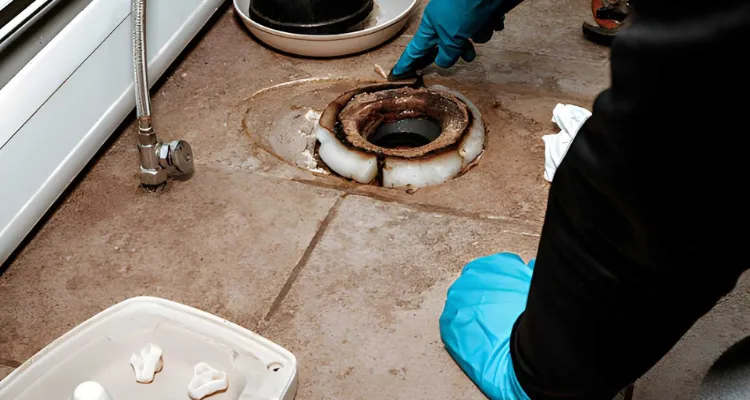
The main sewer cleanout is a capped pipe, usually white or black, found near the foundation outside your home or in the basement. This cap gives direct access to the main line, which makes it the best entry point for snaking or vacuuming out a clog.
To find it, walk the perimeter of your house looking for a pipe fitting with a screw cap sticking a few inches out of the ground, often near where the sewer line exits toward the street. In homes with basements, check near the floor where the main line runs, usually close to the water heater or laundry area.
How Do You Clear a Clog Using a Plunger?
A plunger can clear minor main line clogs by creating pressure that forces the blockage to break apart. This works best when the clog is close to the fixture rather than deep in the line.
- Choose a heavy-duty plunger designed for toilets or drains.
- Make sure there is enough standing water to fully cover the plunger cup.
- Place the plunger firmly over the drain or toilet opening to create a seal.
- Push down slowly, then pull up quickly, and repeat several times.
- Check if water drains normally before moving to another method.
How Do You Clear a Clog With Boiling Water and Baking Soda?
Pouring boiling water followed by a baking soda and vinegar mixture down the main drain can break down grease and soap buildup causing a clog. This method works well for softer blockages but has little effect on solid obstructions like tree roots.
- Boil several gallons of water on the stove.
- Pour half a cup of baking soda into the main drain.
- Follow with one cup of vinegar and let the mixture fizz for a few minutes.
- Slowly pour the boiling water down the drain in stages.
- Wait 10 to 15 minutes, then run water to check if the clog has cleared.
How Do You Use a Drain Snake or Auger on a Main Line?
A drain snake, also called an auger, is the most effective DIY tool for breaking up solid clogs like tree roots, hair, and debris in the main sewer line. It works by physically reaching the blockage and grinding or hooking through it. See how hydro jetting and snaking compare when choosing a method for stubborn drain and sewer clogs.
How Do You Feed the Cable Into the Cleanout?
Open the cleanout cap with a wrench, then feed the snake’s cable slowly into the pipe until you feel resistance. Push gently and avoid forcing the cable, since rough handling can damage the inside of the pipe.
How Do You Break Up and Remove the Clog?
Once you reach the clog, stop pushing and turn the crank handle clockwise so the spiral tip can dig into the blockage. Twist, push, and pull the cable in both directions, working the auger back toward the house and out toward the main line, until the clog breaks apart. Slowly retract the cable, which should bring loosened debris with it, then run water to confirm the line is clear.
How Do You Use a Wet/Dry Vacuum to Clear a Sewer Clog?
A wet/dry vacuum can pull loose debris and standing water out of a main line clog when set to the liquid setting. This method works best combined with a snake, since the vacuum removes debris that has already been loosened.
- Cover any nearby vents to avoid mess or backsplash.
- Create a tight seal between the vacuum hose and the drain opening.
- Switch the vacuum to its liquid setting.
- Run the vacuum to draw water and debris up from the pipe.
- Empty the vacuum bag or tank and repeat as needed.
What Causes Main Sewer Line Clogs?
Tree roots, grease buildup, and non-flushable items are the most common causes of main sewer line clogs. Knowing the cause helps you choose the right DIY method and decide whether the problem is likely to return.
Can Tree Roots Cause a Main Line Clog?
Yes, tree roots are one of the leading causes of main sewer line clogs, since roots naturally grow toward moisture and can enter pipes through small cracks or joints. Once inside, roots expand and trap debris, creating a blockage that worsens over time. Standard snakes and augers often cannot fully clear root intrusions, which typically require professional root-cutting equipment or hydro jetting.
Can Grease and Non-Flushable Items Cause a Clog?
Yes, grease, wipes, paper towels, and other non-flushable items are common causes of main line clogs because they do not break down and can build up along pipe walls. Over time, these materials combine with other debris to form a blockage that restricts water flow.
When Should You Call a Professional Plumber Instead?
Call a professional plumber if the clog returns after DIY attempts, if you notice sewage backing up into multiple fixtures repeatedly, or if you have older or corroded pipes. These situations often point to a deeper issue, such as root intrusion or pipe damage, that basic tools cannot fully resolve. If the sewer pipe itself is damaged, sewer line repair may be necessary instead of another clog-clearing attempt.
A plumber can use a camera inspection to pinpoint the exact location and cause of the clog, then apply the right method, such as hydro jetting or mechanical root cutting, to clear it safely without risking further damage to your pipes. A sewer camera inspection can help identify hidden blockages, root intrusion, or damaged sections of pipe.
How Can You Prevent Future Main Sewer Line Clogs?
Avoid flushing wipes or grease, schedule periodic drain maintenance, and address slow drains early to prevent future main sewer line clogs. Small habits make a noticeable difference over time. Regular drain cleaning can also help address buildup before it develops into a larger blockage.
- Never flush wipes, paper towels, or feminine hygiene products, even ones labeled flushable.
- Pour cooking grease into a container for disposal instead of down the drain.
- Keep trees and shrubs with aggressive root systems away from your sewer line’s path.
- Schedule a camera inspection every few years if your home has older pipes.
- Address slow drains right away instead of waiting for a full backup.
Frequently Asked Questions
Can You Really Clear a Main Sewer Line Clog Yourself?
Yes, minor to moderate main sewer line clogs can often be cleared yourself using a plunger, boiling water, a drain snake, or a wet/dry vacuum. Severe clogs involving tree roots or damaged pipes usually require professional equipment.
How Much Does Professional Sewer Line Clog Removal Cost?
Professional sewer line clog removal typically costs a few hundred dollars, depending on the clog’s severity, location, and the method required to clear it. Costs rise significantly if the line needs to be repaired or replaced rather than simply cleared.
Is It Safe to Use Chemical Drain Cleaners on a Main Line?
Chemical drain cleaners are generally not recommended for main sewer lines, since they can damage older pipes and pose safety risks if not handled carefully. Mechanical methods like snaking or natural options like hot water and baking soda are safer first steps.