A brief gas smell when a burner lights is normal and should fade within seconds. A smell that lingers, returns, or shows up when the stove is off is not normal and should be treated as a possible gas leak, which calls for leaving the area and contacting a professional.
Standing in your kitchen and catching a whiff of gas can be unsettling, especially if you’re not sure whether it’s expected or a sign of a real problem. The honest answer is that it depends on when you smell it and how long it lasts.
This article explains the difference between the brief, normal smell that comes with lighting a gas burner and the kind of persistent smell that points to an actual leak. It also covers common causes behind that lingering smell and what to do the moment you notice one that doesn’t fade.
Why Gas Stoves Sometimes Smell Like Gas
Every gas stove releases a small amount of unburned gas in the moment before the burner ignites. That brief release is part of how the appliance works, not a sign that something’s wrong.
The Normal Ignition Smell
When you turn a burner knob, gas flows to the burner before the igniter creates a spark to light it. In that split second before ignition, a tiny amount of gas escapes unburned, producing a faint smell that should disappear within a few seconds once the flame catches.
Why the Smell Is There at All
The gas that reaches your stove has mercaptan added to it, the same chemical responsible for the rotten egg smell associated with natural gas and propane leaks. Because that smell is deliberately added as a safety feature, even a normal, tiny release during ignition can produce a brief, noticeable odor.
How This Differs Between Burner Types
A stovetop surface burner typically ignites within a few seconds of turning the knob, so its smell fades almost as quickly as it appears. An oven burner can take longer to reach full ignition, sometimes up to around ninety seconds, which means a faint smell lingering slightly longer with the oven isn’t automatically a cause for concern the way the same duration would be with a stovetop burner.
Normal Smell vs. Gas Leak: What’s the Difference
Telling a normal ignition smell apart from a real leak comes down to timing and duration more than the smell’s intensity.
| Situation | Typical Smell Pattern | What It Usually Means |
|---|---|---|
| Right when a burner is turned on | Brief, faint smell that fades within seconds | Normal, expected part of ignition |
| Smell lingers after the burner is lit | Persistent smell that doesn’t go away | Possible issue with ignition or a valve |
| Smell present with the stove completely off | Any noticeable smell at all | Possible leak, treat as a safety concern |
| Smell accompanied by a hissing sound | Persistent or growing smell with sound | Likely active leak, leave immediately |
Common Causes of a Persistent Gas Smell
When the smell doesn’t follow the normal, brief pattern, a few specific issues are typically behind it. A licensed technician can confirm which one applies to your stove.
Delayed Ignition
If the igniter takes longer than expected to spark, gas continues flowing to the burner before it catches, which produces a stronger and longer-lasting smell than usual. A surface burner should typically ignite within a few seconds, and an oven burner within under two minutes, so a noticeably longer delay is worth having checked.
A Worn or Damaged Burner Valve
The valve that controls gas flow to each burner can wear out over time, allowing gas to pass through even when the knob isn’t fully engaging the burner correctly. This can produce a smell that lingers well past the normal ignition window.
An Aging or Damaged Connector Line
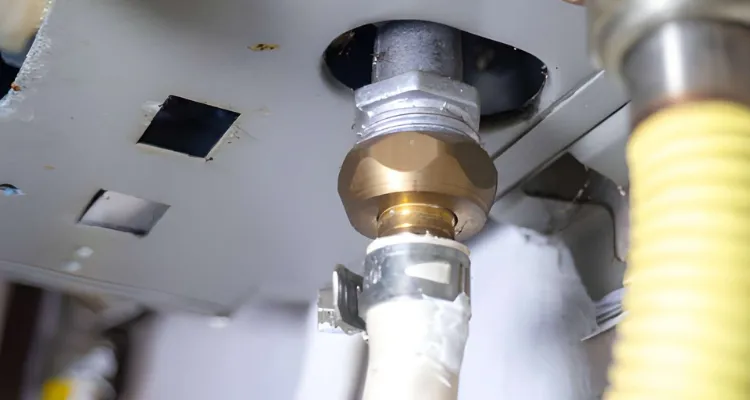
The flexible line connecting your stove to the gas supply can develop small leaks at its fittings as it ages, particularly if the stove has been moved or pulled out for cleaning repeatedly over the years. This type of leak often produces a smell near the back of the stove rather than at the burners themselves.
A Pilot Light Issue
On older stoves with a standing pilot light rather than an electronic igniter, a pilot that’s gone out or is burning inconsistently can allow unburned gas to escape without igniting properly. This is more common in older appliances and less common in newer stoves with electronic ignition.
A Burner Left Slightly On
A knob that isn’t turned fully to the off position can allow a small, continuous flow of gas without an accompanying flame, which produces a persistent smell even though the stove appears to be off. This is one of the more common and least serious causes, but it should still be confirmed rather than assumed.
A Recently Serviced or Reinstalled Stove
If your stove was installed, moved, or serviced within the past day, a small amount of air trapped in the supply line can produce a faint smell that clears on its own within a few hours. This is different from an ongoing issue, but if the smell hasn’t cleared after that window, it’s worth having a technician confirm the connection is sealed properly.
Smells That Aren’t Related to a Gas Leak
Not every unusual smell near your stove points to gas. A few other sources are sometimes mistaken for it.
Spilled Food or Buildup
Food residue or grease buildup inside the oven or around burners can create odors when heated that some people describe as similar to a gas smell, particularly if the buildup has been there for a while.
Blocked Oven Vents
An oven vent blocked by a forgotten pan, foil liner, or debris can affect how the appliance burns gas, sometimes producing an odor along with uneven cooking performance. This is different from an actual leak but is still worth mentioning to a technician if it happens repeatedly.
New Appliance Break-In
A brand-new gas stove can sometimes produce a mild odor during its first few uses as protective coatings or manufacturing residue burn off. This typically fades after a handful of uses and is unrelated to a gas leak.
Nearby Household Products
Fresh paint, certain cleaning products, or strong-smelling items stored near the stove can occasionally produce an odor that gets misattributed to the appliance itself, especially in a smaller or less-ventilated kitchen. If the smell seems to shift or fade based on what else is happening in the room, it’s worth considering these sources before assuming it’s gas-related.
When the Smell Means You Should Leave
A few specific patterns should be treated as a likely gas leak rather than a normal or minor issue.
The Smell Doesn’t Fade
If the smell continues well after a burner has lit, or never fades at all, treat it as a possible leak rather than assuming it will resolve on its own.
The Stove Is Completely Off and You Still Smell Gas
A gas stove shouldn’t produce any noticeable smell when every burner and the oven are fully off. Any smell in this situation is a sign worth taking seriously.
You Hear Hissing Near the Stove
A hissing sound near the stove or the connection behind it, especially combined with a gas smell, points to gas escaping under pressure rather than a normal ignition delay.
The Smell Is Strong or Growing
A smell that’s noticeably stronger than a typical faint ignition odor, or one that seems to be getting stronger rather than fading, should be treated as an active leak.
More Than One Household Member Notices Symptoms
Headaches, dizziness, or nausea that affect more than one person in the household at the same time, especially symptoms that improve after leaving the house, are worth treating as seriously as a smell itself. These symptoms deserve medical attention alongside reporting the situation to a professional.
What to Do If You Suspect a Gas Leak From Your Stove
If you notice any of the signs above, the right response is the same regardless of what’s causing it.
Leave the kitchen and the home immediately, taking household members and pets with you. Don’t investigate the stove further, don’t try to locate the source yourself, and don’t use light switches, phones, or other electrical devices on your way out, since even a small spark can ignite gas that’s built up in the air.
Once you’re a safe distance from the property, call your gas utility’s emergency line or 911. Don’t turn the stove back on or return to the kitchen until a professional has confirmed the area is safe.
Why This Isn’t a DIY Repair
Diagnosing and repairing a gas stove’s valve, connector, or internal lines is licensed, regulated work in most areas. A technician has the training and calibrated equipment to confirm whether a smell is a normal ignition pattern or an actual leak, and to identify exactly which component is responsible if it is one.
Attempting to inspect, adjust, or repair gas components yourself carries real risk, both from potential gas exposure and from the possibility of making a small issue worse. This is true even for older stoves that a household member may have worked on in the past, since gas appliance safety standards and equipment change over time.
Why a Professional Assessment Is More Reliable
A technician doesn’t just confirm whether gas is present. They can identify which specific component is responsible, whether that’s a valve, connector, or ignition delay, and complete the repair in a way that meets current safety standards. That combination of diagnosis and repair in one licensed visit is difficult to replicate safely on your own.
Preventing Future Gas Smell Issues
A few ongoing habits can reduce how often you encounter an unexplained smell from your stove.
Schedule routine maintenance for your gas stove, particularly if it’s an older model or has a standing pilot light, so a technician can catch a worn valve or aging connector before it becomes a persistent problem. Keep a working gas detector in the kitchen as an added layer of protection, since it can alert you to a leak even if the smell is faint or you’re not in the room. Avoid moving or pulling out the stove more than necessary, since repeated movement can stress the connector line over time.
When to Call a Professional
Any persistent gas smell, whether the stove is on or off, calls for a professional response. If the smell is faint and appears only right as you’re leaving safely, call your gas utility or a licensed technician to schedule an inspection once you’re at a safe distance. If the smell is strong, growing, or accompanied by a hissing sound, treat it as an emergency and call your gas utility’s emergency line or 911 immediately.
A technician can confirm whether the issue is a simple ignition delay, a worn valve, a connector line problem, or something more serious, and can safely make the repair once the cause is identified.
Frequently Asked Questions
Is it normal for a gas stove to smell like gas when you turn it on?
Yes, a brief, faint smell right as a burner lights is normal and should fade within a few seconds once the flame catches. This happens because a small amount of gas escapes just before ignition, and it’s not a sign of a leak on its own.
How long should the gas smell last when lighting a burner?
The smell should disappear within a few seconds of the burner igniting. A surface burner typically lights within seconds, and an oven burner within under two minutes, so a smell that lasts noticeably longer than that suggests a delayed ignition or other issue worth having checked.
Why does my stove smell like gas even when it’s off?
A stove shouldn’t produce any gas smell at all when every burner and the oven are completely off. This can indicate a leaking valve, a damaged connector line, or a knob that isn’t fully closed, and it should be treated as a possible gas leak.
Can a new gas stove smell like gas?
Yes, a brand-new stove can produce a mild odor during its first several uses as manufacturing residue or protective coatings burn off. This typically fades within a few uses and is different from the smell associated with an actual gas leak.
Should I try to find the source of the smell myself?
No. Diagnosing gas stove issues involves regulated work that requires specialized training and equipment. If you notice a persistent smell, leave the area and contact your gas utility or a licensed technician rather than investigating the source yourself.
Can a gas stove leak without any smell at all?
It’s uncommon, since mercaptan is added specifically to make leaks noticeable at very low concentrations, but individual smell sensitivity varies, and a working gas detector can serve as a helpful backup. If you have any reason to suspect a leak, treat it seriously even without a strong smell present.
Getting Your Gas Stove Checked
If you’ve noticed a persistent gas smell from your stove and the situation isn’t an active emergency, El Paso Plumbing can inspect the appliance and connections and explain what’s found. Call (915) 285-0087 or request service online to schedule an inspection. If you suspect an active gas leak right now, leave the property and contact your gas utility or emergency services first.