A toilet leaking from the bottom during a flush is usually caused by a worn wax ring, loose bolts, or a cracked base. Flushing sends a surge of water and pressure through the connection between the toilet and floor, forcing water out through any weakened point in the seal.
Noticing water around your toilet right after you flush is one of those problems that gets worse the longer it sits. Water that seeps onto the bathroom floor can soak into the subfloor, leading to rot, mold, or damage that’s far more expensive to fix than the original leak.
This article walks through the most common causes of a base leak, how to figure out which one applies to your situation, and which repairs are reasonable to attempt yourself versus when a plumber should handle it.
The Most Common Cause: A Worn Wax Ring
A failed wax ring is responsible for the majority of toilets leaking from the base when flushed.
What the Wax Ring Does
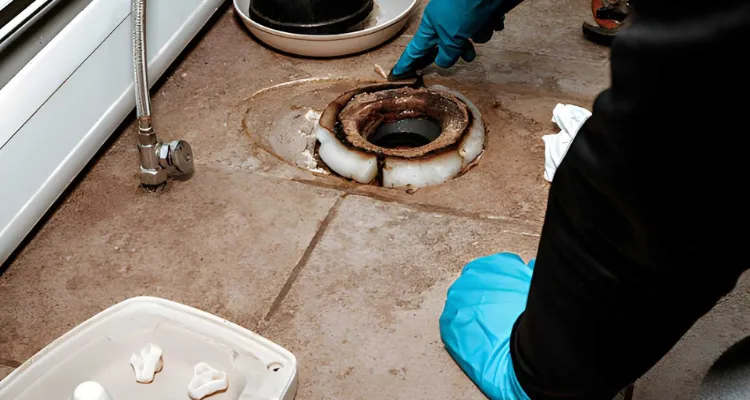
The wax ring sits between the base of the toilet and the flange, the pipe fitting connected to your drain line, creating a watertight seal that keeps water and sewer gases from escaping when you flush.
Why It Fails
Over time, the wax ring can dry out, crack, flatten, or shift out of position, especially if the toilet has been rocking or if the ring was poorly installed to begin with. Once the seal is compromised, the pressure and water volume from a flush is often enough to push water past the weakened point and onto the floor, even if the toilet appears completely dry between flushes.
Signs Specific to a Failed Wax Ring
Water that appears consistently after every flush, rather than randomly or only occasionally, points strongly toward the wax ring. A sewage smell near the toilet base is another common sign, since a failed wax ring lets sewer gas escape along with water.
Why Toilet Weight and Compression Matter
The wax ring relies on being compressed evenly by the weight of the toilet resting on the flange, which is why a level installation and properly tightened bolts matter as much as the ring’s own condition. A ring that’s compressed unevenly, even if it isn’t yet worn out, can fail to seal fully on one side.
Loose or Corroded Mounting Bolts
Bolts that secure the toilet to the floor play a direct role in maintaining the wax ring’s seal.
How Loose Bolts Cause a Leak
Toilets are held to the floor by two bolts, sometimes called closet bolts or tee bolts, that compress the wax ring and keep the toilet stable. If these bolts loosen over time, the toilet can rock slightly with normal use, and that rocking motion gradually breaks the wax ring’s seal, allowing water to escape with each flush.
Why Bolts Loosen Over Time
Regular use naturally puts stress on these bolts, and they can also be under-tightened during the original installation. Corrosion is another factor, particularly in humid bathroom environments where metal bolts are exposed to moisture consistently.
Signs Specific to Loose Bolts
A toilet that visibly rocks or wobbles when you sit down or shift your weight is the clearest sign this is the underlying cause, even before you notice any water on the floor.
Why Rocking Makes the Problem Worse Over Time
Once a toilet starts rocking even slightly, that motion accelerates wear on the wax ring with every use, turning what started as a loose-bolt issue into a compromised seal fairly quickly. Addressing wobble as soon as it’s noticed, before it has a chance to damage the wax ring, can sometimes prevent the leak from developing in the first place.
A Cracked Toilet Base
Physical damage to the toilet itself is a less common but still significant cause of base leaks.
How Cracks Develop
Toilet bases can crack due to age, an impact from a dropped object, over-tightened mounting bolts, or occasionally a manufacturing defect. Even a small, hairline crack can be enough to let water escape during a flush.
Why This Type of Leak Is Different
Unlike a wax ring or bolt issue, a cracked base often leaks continuously, not just during a flush, since the crack provides an ongoing path for water to escape rather than one tied to flush pressure specifically. Cracks can also be difficult to spot without close inspection, since they’re sometimes hairline and located low on the base.
What This Means for Repair
A cracked toilet base generally can’t be repaired in a way that restores a fully reliable seal, which means toilet replacement is usually the appropriate fix rather than attempting to patch or reseal a damaged bowl.
How to Check for a Crack
Inspect the base closely, including the underside where it meets the floor, using a flashlight if needed to spot hairline cracks that aren’t obvious in normal lighting. Running a hand gently along the base can sometimes reveal a crack you couldn’t see, though caution is worth taking given the potential for sharp edges on damaged porcelain.
A Damaged or Improperly Positioned Flange
The flange itself, not just the wax ring sitting on it, can be a source of the problem.
What the Flange Does
The flange is the fitting that connects your toilet to the drain pipe below the floor, and it needs to sit at the correct height and condition for the wax ring to form a proper seal against it.
How Flange Problems Develop
A flange that’s corroded, cracked, or sitting at the wrong height relative to the finished floor can prevent the wax ring from sealing properly, regardless of how new or well-installed that ring is. This sometimes happens after a flooring change, like new tile that raises the floor height without adjusting the flange to match.
Why This Complicates a Simple Wax Ring Replacement
If the flange itself is damaged, replacing just the wax ring won’t solve the underlying problem, since the new ring will face the same sealing issue against a compromised flange. This is one of the more common reasons a wax ring replacement doesn’t fully resolve a base leak.
Flange Height and Flooring Changes
If your home has had new flooring installed at some point, particularly a thicker material like tile over an existing floor, the flange may now sit lower relative to the finished floor than it originally did. Flange extenders are sometimes used to correct this height difference without needing to replace the entire flange, though confirming the right approach usually benefits from a professional assessment.
Common Causes at a Glance
| Cause | Leak Pattern | Additional Signs |
|---|---|---|
| Worn wax ring | Water appears consistently with every flush | Sewage smell, gap between toilet and floor |
| Loose or corroded bolts | Water appears after rocking or shifting | Toilet wobbles when sat on |
| Cracked toilet base | Water present even without flushing | Visible or hairline crack, continuous leak |
| Damaged or misaligned flange | Persists even after wax ring replacement | Uneven toilet height, flange visibly damaged or corroded |
Is It Actually a Leak, or Condensation?
Before assuming a leak, it’s worth ruling out a common look-alike issue, particularly in humid climates or seasons.
What Toilet Sweating Looks Like
In humid conditions, condensation can form on the cool surface of the toilet tank and drip down onto the floor, mimicking the appearance of a base leak without any actual seal failure involved.
How to Tell the Difference
Dry the floor completely, then flush the toilet and observe the tank and base closely over the next several minutes. Water forming on the tank’s exterior and dripping down points to condensation, while water appearing specifically at the base, separate from the tank, points to an actual seal leak.
How to Confirm the Source of the Leak
A simple test can help you narrow down whether the leak is coming from the base seal before deciding on next steps.
The Toilet Paper Test
Wipe the floor completely dry, then place dry toilet paper around the base of the toilet, including any area where you’ve previously noticed water. Avoid using the toilet for several hours, ideally overnight, then check whether the toilet paper is wet. If it is, the leak is likely coming from the base seal, either the wax ring or the flange.
Checking for Other Water Sources First
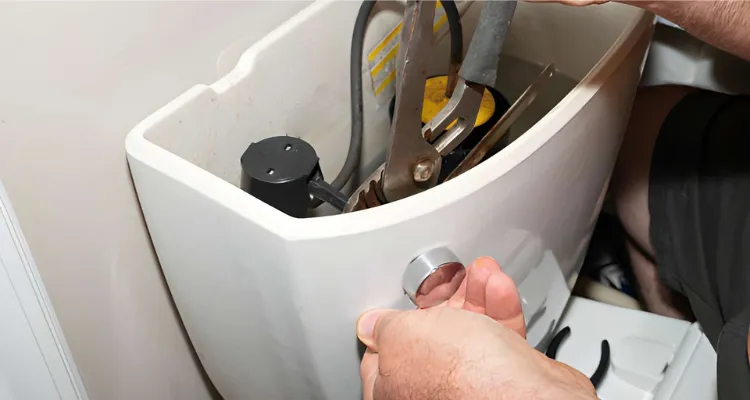
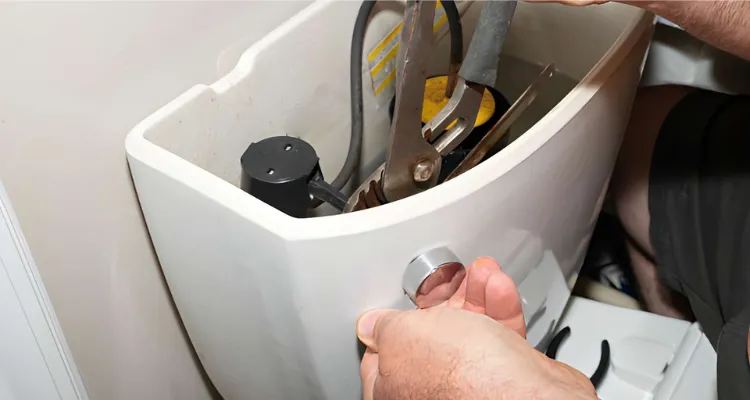
Before assuming the leak is from the base, check the tank for other possible sources, like a loose water supply line connection, a leaking supply valve, or moisture from a damaged flush valve seal inside the tank. Water from these sources can run down the outside of the toilet and pool at the base, mimicking a base seal leak.
Ruling Out a Nearby Fixture
If your bathroom has a nearby shower, tub, or sink, confirm the water isn’t actually coming from one of those sources and simply pooling near the toilet due to floor slope. This step is easy to overlook but can save an unnecessary toilet removal if the real source turns out to be elsewhere in the room.
What Happens If the Leak Isn’t Addressed
Understanding the risk of waiting helps explain why this issue deserves prompt attention even if the leak seems minor.
Floor and Subfloor Damage
Water that repeatedly seeps onto the floor around a toilet’s base can soak into the subfloor, leading to soft spots, rot, or warping, particularly with wood subfloors that absorb moisture readily.
Mold Growth
Persistent moisture around the base, especially in a warm bathroom environment, creates conditions favorable for mold growth, which can affect indoor air quality and be more difficult and costly to remediate the longer it continues.
Why Small Leaks Escalate in Cost
A minor base leak addressed early is typically a straightforward, inexpensive repair. Left unaddressed, the same leak can eventually require subfloor repair or replacement, turning a simple fix into a significantly larger project.
Effects on Ceilings Below
If your bathroom is on an upper floor, a persistent base leak can eventually show up as water stains on the ceiling of the room below, which is a sign the moisture has already traveled well beyond the immediate area around the toilet. This is a strong indication that the leak has been present for some time and warrants prompt attention.
What You Can Reasonably Fix Yourself
Some causes of a base leak are within reach for a homeowner comfortable with basic tools, while others are better left to a professional.
Tightening Loose Bolts
If the toilet is rocking and the bolts appear accessible, gently tightening them, alternating side to side in small increments, can sometimes resolve the issue without needing to remove the toilet. Over-tightening should be avoided, since excessive force can crack the toilet base.
Replacing a Wax Ring
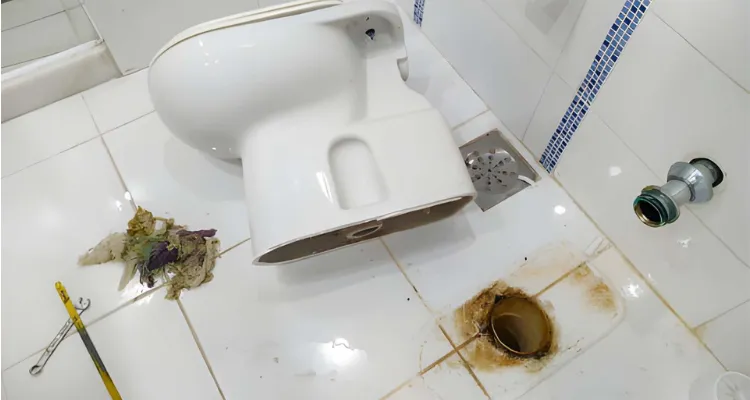
Replacing a wax ring is a common DIY repair, though it requires removing the toilet entirely, which involves shutting off the water supply, disconnecting the supply line, removing the mounting bolts, and carefully lifting the toilet off the flange. This task is manageable for many homeowners but does require some physical effort and careful handling of a heavy fixture.
What to Watch for During a DIY Wax Ring Replacement
While the toilet is removed, inspect the flange closely for cracks, corrosion, or an incorrect height relative to the floor. If the flange itself shows damage, replacing just the wax ring won’t solve the problem, and flange repair is generally a task better suited to a professional.
Choosing the Right Replacement Ring
Standard wax rings work for most installations, but a wax ring with a plastic flange or horn is designed for situations where the flange sits at or below the level of the finished floor, which can improve the seal in that specific scenario. Confirming your flange’s height relative to the floor before purchasing a replacement ring helps you choose the right type the first time.
When to Call a Professional
A few situations call for professional help rather than a DIY attempt. If the toilet bolts spin freely without tightening, the threads may be stripped or corroded beyond a simple fix. If the flange is damaged, corroded, or sitting at the wrong height, toilet repairing or replacing it typically requires more specialized plumbing knowledge than a wax ring swap alone. A cracked toilet base generally means the toilet needs replacement, and if you’re not confident handling toilet removal and reinstallation safely, a plumber can complete the repair correctly the first time.
A plumber can also confirm the exact cause when a leak doesn’t have an obvious, single explanation, since a base leak can sometimes stem from more than one contributing factor at once, like a slightly loose bolt combined with an aging wax ring.
What a Professional Repair Typically Involves
A plumber handling this repair will generally remove the toilet, inspect the flange and subfloor for damage, replace the wax ring and any worn bolts, and confirm the flange height is correct before reinstalling the toilet. If subfloor damage is discovered during this process, that repair is usually addressed before the toilet goes back in place, since reinstalling over a compromised subfloor doesn’t resolve the underlying issue.
Frequently Asked Questions
Why does my toilet only leak when I flush it, not all the time?
This pattern points toward a wax ring or bolt-related issue, since the pressure and water volume from a flush is often what pushes water past a weakened seal. A toilet that leaks continuously, even without flushing, more often points to a cracked base rather than a seal issue.
How much does it cost to fix a toilet leaking at the base?
A basic wax ring or bolt repair, including labor and materials, generally costs between $75 and $250, though this can vary based on your location and whether additional issues, like flange damage, are discovered during the repair. [VERIFIED PRICE REQUIRED BEFORE PUBLICATION]
Can I just add more caulk around the toilet base to stop the leak?
No. Caulk around the base is meant to prevent mop water and spills from seeping underneath the toilet, not to seal an actual plumbing leak. Caulking over an active leak can actually make the problem worse by trapping water underneath the toilet where it’s harder to detect.
How do I know if it’s a wax ring or a flange problem?
If replacing the wax ring resolves the leak and it doesn’t return, the wax ring was likely the sole cause. If the leak persists or returns shortly after a wax ring replacement, the flange is likely damaged, corroded, or positioned incorrectly and needs its own repair.
Is a toilet leaking from the base an emergency?
It’s not typically an emergency in the sense of requiring immediate after-hours service, but it shouldn’t be ignored either. Addressing it promptly limits the risk of floor and subfloor damage, which becomes more extensive and costly the longer the leak continues.
Can I replace a wax ring myself, or do I need a plumber?
Many homeowners are able to replace a wax ring themselves with basic tools, since the process mainly involves removing the toilet, cleaning the flange, and installing a new ring. If you’re not comfortable safely lifting and handling the toilet, or if you discover flange damage during the process, a plumber is the safer choice.
Do I need to replace the toilet if the base is cracked?
In most cases, yes. A cracked base doesn’t hold a reliable seal even after a repair attempt, and continuing to use a cracked toilet risks a larger leak or, in some cases, the crack worsening under normal use. Replacing the toilet is generally the more reliable long-term solution.
Getting Your Toilet Leak Fixed
If your toilet is leaking from the base and you’d rather have a professional handle the diagnosis and repair, El Paso Plumbing can identify the exact cause and fix it correctly the first time. Call (915) 285-0087 or request service online to schedule an inspection.