Start with the fuel source already available in your home, natural gas, propane, or electric, then choose between a storage tank, tankless, heat pump, or solar system based on space, hot water demand, and budget. Size the unit using its first hour rating or flow rate rather than tank volume alone, compare efficiency using the Uniform Energy Factor, and factor in installation requirements like venting, electrical capacity, and available space before making a final decision.
Choosing a water heater involves more decisions than most homeowners expect, and getting any one of them wrong can mean running out of hot water during a busy morning or paying to correct an installation that didn’t fit the space or utility connections available. Fuel type, heater type, sizing, and efficiency all interact with each other rather than functioning as separate choices.
This guide walks through each decision in the order it actually needs to happen: confirming available fuel, comparing heater types, sizing the unit correctly using first hour rating or flow rate, understanding efficiency labeling, and accounting for installation requirements and long-term cost. It also covers when to replace proactively rather than waiting for a failure, and the specific situations, like a mobile home or a small outbuilding, that call for a different approach entirely.
What Fuel Source Should You Choose?
The fuel source available at your home’s existing connections usually determines your realistic options before anything else does. A home already piped for natural gas can support a gas storage tank or a gas tankless unit without major new utility work. A home without a gas line can still use electric storage, electric tankless, or a heat pump water heater, though a heat pump unit and some larger electric tankless models require adequate electrical capacity. Propane is common in homes without natural gas service, particularly in rural areas, and functions similarly to natural gas equipment with a different fuel connection. Switching fuel types, rather than staying with what’s already installed, usually adds cost for new gas or electrical work, so most households choose within their existing fuel type unless there’s a specific reason to change.
What Types of Water Heaters Are Available?
The main choices are storage tank, tankless, heat pump, and solar, and each fits a different combination of space, budget, and hot water demand.
Storage Tank Water Heaters
A storage tank heats and holds a set volume of water, ready to use at any time. These units have the lowest upfront cost of the main types and are widely available in gas and electric versions. They do lose some heat to standing water over time, and they take up more floor or closet space than a tankless unit.
Tankless Water Heaters
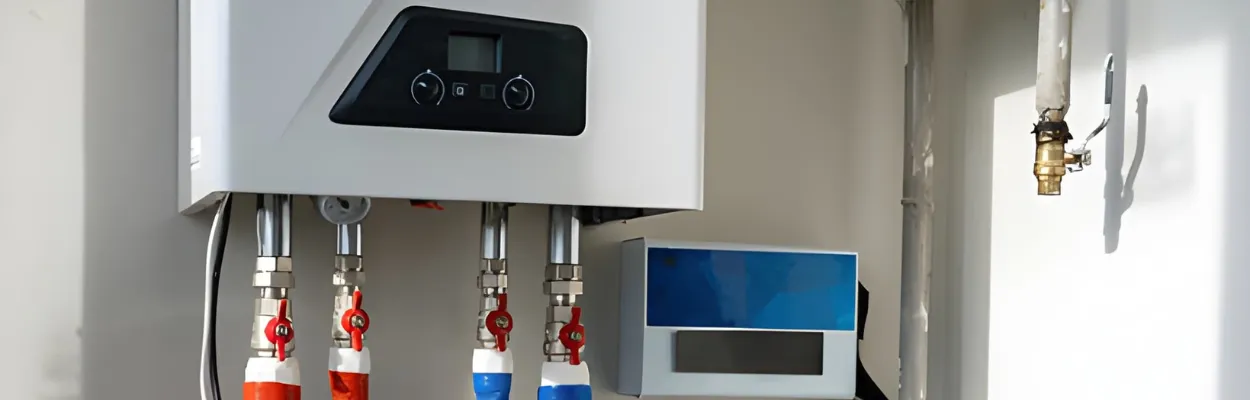
A tankless unit heats water on demand as it flows through, rather than storing it. This avoids standby heat loss and takes up significantly less space, often mounted on a wall. Tankless units generally cost more upfront and may require upgraded gas line sizing or electrical capacity depending on the model, along with specific venting for gas versions.
Heat Pump Water Heaters
A heat pump water heater moves heat from the surrounding air into a storage tank rather than generating heat directly, which makes it significantly more efficient in the right setting. It needs a location with enough surrounding air volume to draw from, and it performs best in a moderate ambient temperature rather than a very cold, tightly enclosed space. Many models include electric resistance backup elements for high demand periods.
Solar Water Heaters
A solar water heater uses a roof-mounted collector to gather heat and a storage tank to hold the heated water, typically paired with a backup gas or electric heating element for cloudy periods or high demand. These systems have the highest upfront cost and depend on adequate roof exposure and orientation, but they can significantly reduce ongoing energy use in the right climate.
How Do You Size a Water Heater Correctly?
Sizing a storage tank water heater by gallons alone is less accurate than sizing it by first hour rating, which measures how much hot water it can actually deliver in an hour starting from a full tank. According to ENERGY STAR, the first hour rating (FHR) is an estimate of the maximum volume of hot water in gallons a storage water heater can supply within an hour beginning fully heated, measured at a 125 degree Fahrenheit outlet temperature. A tank’s stated gallon capacity does not equal its FHR, since recovery rate during that hour adds to what the stored volume alone provides.
As a general starting point based on residential code guidance, a 1 to 2 person household typically needs a 30 to 40 gallon tank, a 3 to 4 person household typically needs 40 to 50 gallons, and a household of 5 or more typically needs 50 to 80 gallons. These are starting ranges, not fixed rules, since actual demand depends on the number of bathrooms, whether showers and appliances run simultaneously, and household habits.
How Do You Size a Tankless Water Heater?
A tankless water heater is sized by flow rate in gallons per minute, not by a gallon capacity, since it doesn’t store water at all. Add up the flow rate of every fixture likely to run at the same time during peak demand, such as a shower, a dishwasher, and a washing machine, to estimate the maximum simultaneous flow rate the unit needs to support. Incoming groundwater temperature also affects tankless sizing, since a unit in a colder climate has to raise incoming water through a larger temperature rise than the same unit in a warmer region, which reduces its effective flow rate at that higher temperature rise.
How Do You Size a Heat Pump Water Heater?
A heat pump water heater is typically sized somewhat larger than an equivalent electric resistance tank, since upsizing reduces how often the less efficient backup element has to run. ENERGY STAR guidance for heat pump water heater installations recommends following the local plumbing code’s minimum first hour rating requirements and the manufacturer’s tank sizing recommendations, then upsizing beyond standard practice where efficiency is the priority. A larger tank allows the heat pump component to do more of the actual heating work instead of relying on backup resistance elements during high demand periods.
What Does Energy Efficiency Labeling Mean?
The Uniform Energy Factor, or UEF, is the standard measurement for comparing water heater efficiency, and a higher UEF means better efficiency within the same product category. According to the U.S. Department of Energy, water heaters are grouped into categories based on their first hour rating, and UEF should only be compared between models within the same category, not across different types or sizes. A higher UEF does not automatically mean lower annual operating cost across every fuel type, since electricity, natural gas, and propane pricing differ significantly by region. The yellow EnergyGuide label on a new unit shows its estimated annual operating cost alongside its UEF, which allows a more direct comparison between specific models under consideration.
What Installation Requirements Should You Check Before Buying?
Each water heater type has installation requirements that can affect cost and feasibility as much as the unit’s price does. A gas storage or gas tankless unit needs proper venting and, in an enclosed space with no outside access, may require a sealed combustion design rather than a standard atmospheric vent. An electric tankless or heat pump water heater needs adequate electrical capacity, and a heat pump unit specifically needs enough surrounding air space to draw heat from efficiently. A drain pan, expansion tank, and adequate clearance around the unit may also be required depending on local code. Confirming these requirements before purchase avoids discovering a costly retrofit is needed partway through installation.
How Do Mobile Homes and Small Spaces Change the Choice?
Mobile homes require water heaters specifically approved for that use, and available space often narrows the choice further than usage alone would. These units must meet manufactured housing standards, and gas versions need the correct type, natural gas or propane, matched to the home’s fuel supply and whether the unit has outside or inside-only access. A small outbuilding, detached garage, or distant secondary bathroom is often better served by a small point-of-use or utility water heater, which can range from roughly 2.5 to 19 gallons, rather than extending a hot water line from the home’s main unit.
How Do Long-Term Costs Compare?
Upfront price is only part of the cost comparison, since fuel type, efficiency, and expected service life all affect the total cost over time. A tankless unit typically costs more to purchase and install than a storage tank of similar capacity, but it can offset some of that gap through lower standby energy loss and a longer typical service life. A heat pump water heater often costs more upfront than a standard electric tank but can use less energy per gallon heated in a suitable location. Comparing the EnergyGuide label’s estimated annual cost across the specific models you’re considering, rather than assuming one heater type is always cheaper to run than another, gives a clearer picture for your specific household and utility rates.
When Should You Replace a Water Heater Proactively?
Replacing a water heater before it fails, rather than waiting for a leak, is worth considering once a unit is well into its typical service life or already showing signs of wear. Visible corrosion, repeated repairs, rising energy costs, and reduced hot water capacity are all signs a unit is nearing the end of its usable life. A proactive replacement also gives you time to properly research fuel type, sizing, and efficiency rather than making a rushed decision after an unexpected failure, which often leads to buying whatever unit is immediately available rather than the best fit for the household.
Frequently Asked Questions
What size water heater do I need for a family of four? A household of 3 to 4 people typically needs a storage tank in the 40 to 50 gallon range, though the more accurate measure is first hour rating rather than gallon capacity alone, since recovery rate also affects how much hot water is actually available in a busy hour.
Is a tankless water heater worth the extra upfront cost? It depends on household hot water usage patterns and how long you plan to stay in the home. Tankless units cost more to purchase and install but avoid standby heat loss and often carry a longer typical service life, which can offset some of the higher initial cost over time.
Do heat pump water heaters work in cold basements? They work best in a space with a moderate ambient temperature and enough surrounding air volume, since they draw heat from the surrounding air rather than generating it directly. A very cold or extremely tight enclosed space reduces their efficiency and may require supplemental heating strategies.
What is the difference between UEF and gallon capacity? Gallon capacity describes how much water the tank physically holds, while the Uniform Energy Factor measures overall efficiency. Neither number alone tells you how much hot water the unit can deliver in a busy hour, which is what first hour rating measures instead.
Can I install a gas water heater without existing gas service? Adding gas service where none exists usually requires a new gas line installation, which adds meaningful cost beyond the water heater itself. Many homes without existing gas service choose an electric or heat pump water heater instead to avoid that additional utility work.
How much bigger should a heat pump water heater tank be compared to an electric tank? There’s no single universal number, since it depends on household demand and the specific model’s performance, but efficiency guidance generally recommends sizing above standard electric resistance tank practice so the heat pump component handles most of the heating rather than the backup element.