Plumbers find gas leaks using electronic gas detectors, soap bubble tests, and pressure testing on gas lines and fittings, combined with a visual inspection of pipes, connections, and appliances. For hidden or underground leaks, they may use acoustic listening equipment or coordinate with the gas utility for specialized locating tools.
If you’ve smelled something like rotten eggs near a gas appliance or noticed your gas bill jump for no clear reason, it’s natural to wonder how a professional actually confirms where a leak is coming from. Gas leaks aren’t something to search for yourself, but understanding the process can help you know what to expect once a licensed plumber or gas technician arrives.
This article explains the equipment and methods plumbers use to detect gas leaks, how they narrow down a leak’s exact location, and what safety steps matter most before any of that testing begins. It also covers when a plumber handles the job and when the gas utility needs to be involved instead.
Why Gas Leak Detection Is Different From Water Leak Detection
Water leaks show up as damage over time. Gas leaks carry an immediate risk of fire, explosion, or carbon monoxide exposure, which changes how a professional approaches the job from the very first step.
Safety Comes Before Diagnosis
A plumber responding to a suspected gas leak will typically confirm the area is safe before doing any detailed testing. This can include shutting off gas to the property at the meter, ventilating the space, and clearing anyone from the area until it’s confirmed safe to proceed.
Why This Isn’t a DIY Project
Locating a gas leak requires specialized equipment and training to interpret readings correctly, and testing near an active leak carries real risk if done incorrectly. This is licensed, regulated work in most areas, and attempting to search for a gas leak yourself can put you and your home at risk.
How Licensing Requirements Vary
Gas line work generally requires a specific plumbing license or certification beyond a standard plumbing license, and requirements vary by state gas line or appliance connection and municipality. This is part of why it’s worth confirming that a company handling gas line inspection or repair holds the appropriate credentials for gas work specifically, not just general plumbing.
Common Signs That Prompt a Gas Leak Inspection
Before any equipment comes out, a plumber usually starts by asking what you’ve noticed. These are the signs that typically prompt a call in the first place.
The Smell of Rotten Eggs or Sulfur
Natural gas itself is odorless, so utility companies add a chemical called mercaptan that smells like rotten eggs or sulfur specifically so leaks can be noticed by smell. This is usually the first and most recognizable warning sign.
A Hissing or Whistling Sound
A hissing sound near a gas line, meter, or appliance connection can indicate gas escaping under pressure. This sound is sometimes faint, so it’s more likely to be noticed in a quiet room than in an area with background noise.
Dead or Discolored Vegetation
Gas escaping from an underground line can travel through soil and affect nearby plants, sometimes causing patches of dead or yellowing vegetation with no other clear cause. This sign is more relevant for underground supply lines than for indoor plumbing.
Higher Than Usual Gas Bills
A gas bill that’s noticeably higher without a change in household habits can point to gas escaping somewhere in the system rather than being used by an appliance. This sign alone isn’t proof of a leak, but it’s often enough to warrant an inspection.
Physical Symptoms in the Household
Headaches, dizziness, nausea, or fatigue that improve after leaving the house can be associated with gas or carbon monoxide exposure. These symptoms should be treated seriously and reported to a medical professional in addition to having the gas system inspected.
Pilot Lights That Won’t Stay Lit
A pilot light on a water heater, furnace, or stove that keeps going out can sometimes be related to a gas supply issue, though it can also stem from other causes like a faulty thermocouple. This sign alone isn’t a confirmed leak, but it’s worth mentioning to a plumber alongside any other symptoms you’ve noticed.
What Happens Before Any Testing Begins
A plumber’s first priority when responding to a suspected gas leak is confirming the property is safe to enter and work in.
Ventilating the Area
If it’s safe to do so, opening windows and doors before testing begins helps clear any accumulated gas and reduce concentration in the air. This step is typically done before any equipment is used inside the home.
Shutting Off Gas at the Meter
In many cases, a plumber or gas technician will shut off gas service at the meter as a precaution while confirming the leak’s location, especially if the smell or reading suggests a significant leak. Gas service is restored only once the leak has been repaired and the system has been checked for safety.
Confirming No Ignition Sources Are Active
Before testing begins, a technician will typically make sure no open flames, sparks, or electrical switches are being used nearby, since even a small ignition source can be dangerous in the presence of leaking gas.
Equipment and Methods Plumbers Use to Find Gas Leaks
Once the area is confirmed safe, a plumber uses a combination of tools to locate the exact source of a leak.
Electronic Gas Detectors
Handheld electronic gas detectors use sensors, often electrochemical or semiconductor-based, to detect trace amounts of gas in the air. A plumber moves the detector slowly along pipes, joints, and appliance connections, watching for a reading that spikes near the leak’s location.
Soap Bubble Testing
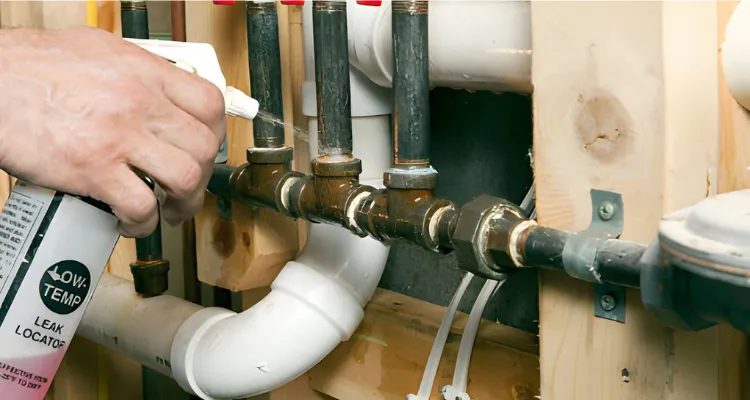
For accessible fittings and connections, a plumber may apply a soapy solution and watch for bubbles forming, which indicates gas escaping at that specific point. This method is simple and reliable for visible connections, though it doesn’t work for leaks hidden behind walls or underground.
Pressure Testing
Pressure testing involves pressurizing a section of gas line and monitoring whether that pressure holds steady over a set period of time. A drop in pressure confirms a leak exists somewhere in that section, even before the exact point is pinpointed.
Combustible Gas Indicators
These devices measure the concentration of combustible gas in the air and are often used alongside electronic detectors to confirm readings and assess how significant a leak is. They’re especially useful for confirming whether an area is safe to continue working in.
Acoustic and Ultrasonic Listening Equipment
For leaks that aren’t visible or accessible, acoustic equipment can detect the sound of gas escaping under pressure, even through walls, floors, or soil. This method is more commonly used for harder-to-reach leaks, including underground supply lines.
Visual Inspection
Alongside any equipment, a plumber inspects visible pipes, fittings, and appliance connections for corrosion, damage, or loose connections that could indicate where a leak is likely to be. Visual inspection often narrows down where to focus more detailed testing.
Why Multiple Methods Are Often Combined
Rather than relying on a single tool, plumbers typically layer these methods together, using an electronic detector to identify a general area, then confirming the exact point with a soap bubble test or pressure check. Combining methods reduces the chance of missing a leak or misidentifying its source, which matters given the safety stakes involved.
Comparing Common Gas Leak Detection Methods
The table below summarizes how these methods are typically used and what situations they fit best.
| Detection Method | Best Used For | How It Works |
|---|---|---|
| Electronic gas detector | General area scanning near pipes and connections | Sensors detect trace gas concentrations in the air |
| Soap bubble test | Visible, accessible fittings and joints | Bubbles form where gas escapes through a soapy solution |
| Pressure testing | Confirming a leak exists in a section of line | A pressure drop over time indicates gas is escaping somewhere in that section |
| Combustible gas indicator | Assessing leak severity and area safety | Measures combustible gas concentration in the air |
| Acoustic or ultrasonic equipment | Hidden, underground, or hard-to-reach leaks | Detects the sound of gas escaping under pressure |
How Plumbers Narrow Down the Exact Location
Finding a leak usually isn’t a single step. It’s a process of eliminating possibilities until the exact point is confirmed.
Isolating Appliances One at a Time
A plumber may shut off gas to individual appliances, like a water heater, furnace, or stove, one at a time to see whether a detected leak resolves. This helps determine whether the leak is coming from a specific appliance connection rather than the main supply line.
Testing Section by Section
For a longer run of pipe, a plumber may test in sections, using pressure testing or an electronic detector at multiple points, to narrow down which portion of the line contains the leak. This is more efficient than trying to inspect an entire system at once.
Confirming Repairs Solved the Problem
After a repair is made, a plumber typically retests the area to confirm the leak is fully sealed before restoring gas service. This follow-up check matters because a repair that looks complete can still leave a smaller leak at the same fitting if it isn’t verified.
Following Up on Detector Readings
When an electronic detector shows a spike in one area, a plumber typically follows up with a more precise method, like a soap bubble test on a specific fitting, to confirm the exact point before recommending a repair.
When a Plumber Handles the Job vs. When the Gas Utility Is Involved
Not every gas leak situation is handled the same way, and knowing the difference matters if you’re trying to figure out who to call first.
The Role of a Licensed Plumber
A plumber licensed to work on gas lines typically handles leaks in the piping and appliance connections inside your home, from the meter through to your water heater, furnace, stove, or other gas-powered equipment. This includes locating the leak, recommending repairs, and completing the fix once the leak’s exact location is confirmed.
The Role of the Gas Utility
The gas utility is generally responsible for the gas line up to and including the meter, along with the main supply lines running to your property. If a suspected leak is at or before the meter, or if you’re unsure where the leak originates, the utility company is usually the right first call, and many utilities offer a 24-hour emergency line for exactly this situation.
Why This Distinction Matters in an Emergency
If you smell gas and aren’t sure whether the source is on your side of the meter or the utility’s, don’t try to figure it out yourself. Leave the property and contact your gas utility or emergency services from a safe location, and let a professional determine where the leak actually originates.
Underground Gas Line Leak Detection
Leaks in underground supply lines require a different approach than indoor plumbing since the pipe isn’t visible or directly accessible.
Signs Specific to Underground Leaks
Beyond the general warning signs, underground leaks can show up as bubbling in standing water, a hissing sound from the ground, or unusually dead patches of grass along the line’s path. These signs point to gas escaping from a buried section of pipe rather than an indoor connection.
Specialized Locating Equipment
For underground lines, technicians often use more sensitive acoustic or ultrasonic equipment capable of detecting gas movement through soil, sometimes combined with a technique called bar hole testing, where a small hole is drilled at intervals along the suspected path to sample for gas presence. This work is typically handled by the gas utility or a specially trained contractor rather than a general plumber.
Why Underground Detection Takes Longer
Testing along a buried line’s full path takes more time than checking a few indoor connections, since technicians often need to sample multiple points before narrowing down the exact section involved. Weather, soil type, and how deep the line runs can all affect how quickly this process moves.
Safety Guidance If You Suspect a Gas Leak
If you smell gas, hear hissing near a gas line or appliance, or notice any of the signs described above, leave the property immediately rather than investigating further yourself. Don’t use light switches, phones, or any electrical device inside the home, since even a small spark can ignite leaking gas. Once you’re at a safe distance, call your gas utility’s emergency line or 911, and don’t return to the property until a professional confirms it’s safe to do so.
Never attempt to locate or repair a suspected gas leak on your own. Testing gas lines and appliance connections requires licensed training and calibrated equipment, and working near a leak without that training carries a real risk of fire, explosion, or exposure to harmful gas.
When to Call a Professional
Any suspected gas leak calls for a professional response, whether that’s your gas utility’s emergency line or a licensed plumber, depending on where the leak seems to be located. Don’t wait to see if the smell goes away on its own, and don’t try to identify the source yourself beyond noting what you observed to report to the professional who responds.
Once the immediate safety concern is addressed, a licensed plumber can inspect your gas appliances, connections, and interior lines, confirm whether ongoing maintenance or repair is needed, and explain what the inspection found in plain language.
Frequently Asked Questions
How do plumbers know where a gas leak is coming from?
Plumbers use electronic gas detectors, soap bubble tests on visible fittings, and pressure testing to narrow down a leak’s location. For hidden or underground leaks, acoustic equipment that detects the sound of escaping gas is often used instead, since these leaks aren’t visible or directly accessible.
Can you smell a gas leak, or does it need special equipment?
Natural gas itself is odorless, but utility companies add a chemical called mercaptan that creates a distinct rotten egg smell specifically so leaks are noticeable. Not every leak produces a strong enough smell to detect right away, which is why professional equipment is still used to confirm and locate leaks precisely.
Is it safe to search for a gas leak myself?
No. Searching for a gas leak yourself risks exposure to gas, and using electronics or light switches near a leak can create a spark that ignites it. If you suspect a gas leak, leave the property and contact your gas utility or emergency services from a safe location instead.
What’s the difference between a plumber and the gas company for a leak?
A licensed plumber typically handles gas lines and appliance connections inside your home, from the meter onward. The gas utility is generally responsible for the main supply line and the meter itself, and most utilities have an emergency line for suspected leaks in that portion of the system.
How long does it take to find a gas leak?
A leak in an accessible location, like a visible appliance connection, can often be confirmed within an hour using electronic detection and a soap bubble test. Hidden or underground leaks can take longer, since more specialized acoustic equipment and section-by-section testing are usually required.
Can a small gas leak be dangerous?
Yes. Even a small, slow leak can build up gas concentration in an enclosed space over time, creating a fire or explosion risk, and continuous low-level exposure can also cause symptoms like headaches or nausea. Any suspected leak, regardless of size, should be treated as a safety concern and reported right away.
Do gas leak detectors work the same way as smoke detectors?
No. A gas detector senses the presence of natural gas, propane, or carbon monoxide using chemical or electronic sensors, while a smoke detector responds to smoke particles from fire. Some combination devices monitor for both, but they use different sensing technology to do so.
Getting a Gas Line Inspection
If you’ve noticed a gas smell, higher bills, or other signs discussed here, and the situation isn’t an active emergency, Ele Paso Plumbing can inspect your gas appliances and interior lines and explain what’s found. Call (915) 285-0087 or request service online to schedule an inspection. If you suspect an active gas leak right now, leave the property and contact your gas utility or emergency services first.