A gas smell near a water heater usually means a natural gas leak, since utilities add mercaptan to give gas its rotten egg odor. If you notice this smell, leave the home immediately, avoid switches or flames, and call your gas utility or 911 from a safe location.
You walked past your water heater and caught a whiff of something like rotten eggs. Now you’re wondering if it’s dangerous or just an odd smell that will pass. That question matters, because a gas smell near a gas appliance is one of the few plumbing issues that calls for immediate action rather than a wait-and-see approach.
Not every strange smell near a water heater means gas is leaking. Sometimes the odor comes from the water itself, not the air. This article explains what causes each type of smell, how to tell them apart, and exactly what to do if you believe gas is present. It also covers when a professional inspection is the right next step.
What a Gas Smell Near Your Water Heater Actually Means
Natural gas has no smell on its own, so utility companies add a chemical called mercaptan that creates a strong rotten egg or sulfur odor. This odorant is a built-in safety feature. It exists so that a leak, even a small one, is noticeable long before the gas builds up to a dangerous level. If you smell this near your water heater, gas line, or gas meter, treat it as a possible leak rather than a minor annoyance.
Propane is treated the same way. Both gases are combustible, and either one collecting in an enclosed space like a utility closet or basement creates a real fire and explosion risk. The smell is your warning sign, and it should be taken seriously every time, even if it seems faint or comes and goes.
Why the Smell Can Be Confusing
The rotten egg smell tied to gas leaks is easy to confuse with a different, unrelated odor that comes from the water itself. Both smells share the same general description, which is part of why so many homeowners aren’t sure what they’re dealing with. The difference matters because one is a plumbing nuisance and the other is a safety emergency. The next section explains how to tell them apart.
Gas Smell in the Air vs. Rotten Egg Smell in Your Water
The easiest way to tell the two apart is location: a gas leak smells strongest in the air around the water heater and gas lines, while a water odor problem only shows up when you run the hot tap. Paying attention to where and when you notice the smell gives you a strong first clue, though a licensed professional is still the only way to confirm what’s actually happening.
Smell Comes From the Air Near the Appliance
If the odor is present in the room even when no water is running, and it seems to come from the water heater itself, the gas line, or the gas meter, this points toward an actual gas leak. You may also notice a faint hissing sound near a connection or valve. This combination is a safety concern, not a maintenance item, and it should be treated according to the steps later in this article.
Smell Only Appears When Running Hot Water
If the odor only shows up when you turn on the hot tap, and cold water runs clear and odor-free, the cause is usually inside the tank rather than the gas supply. This is commonly linked to a reaction between the water heater’s anode rod and naturally occurring sulfates in your water supply, which produces hydrogen sulfide gas. It’s an unpleasant but different issue from a gas line leak, and it’s covered in more detail below.
Common Causes of a Real Gas Leak Near a Water Heater
A true gas smell near a water heater is usually traced back to a loose fitting, a worn valve, a failed pilot assembly, or aging gas supply lines, though the exact source always requires a professional inspection to confirm. confirm most common leak points for local gas water heater installations against manufacturer service documentation.
Loose or Damaged Gas Line Connections
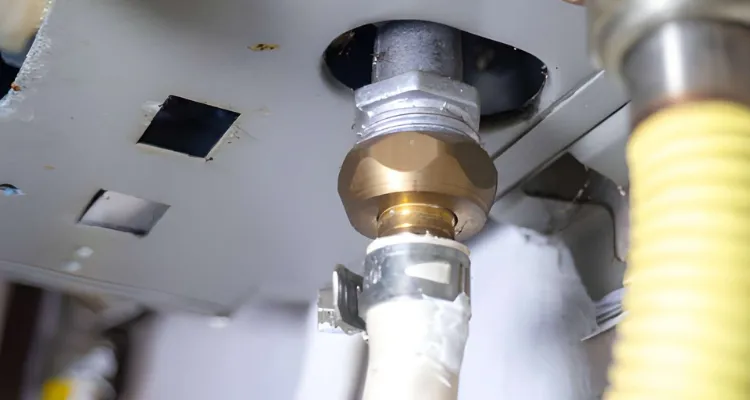
Gas lines run from the meter to the water heater through a series of fittings and connectors. Over time, these connections can loosen from vibration, corrode, or develop small cracks. Even a small gap at a fitting can allow gas to escape slowly, which is often enough to produce a noticeable smell before any other symptom appears.
Pilot Light or Burner Assembly Problems
On standard gas water heaters, the pilot light and burner assembly sit at the bottom of the tank. A malfunctioning thermocouple, a dirty burner, or a valve that isn’t sealing correctly can allow small amounts of gas to escape instead of burning cleanly. This is a job for a licensed technician, since it involves gas-carrying components that are not meant for homeowner repair.
Aging or Failing Gas Control Valve
The gas control valve regulates how much gas reaches the burner. As water heaters age, this valve can wear out or fail to close completely, allowing gas to seep out even when the burner isn’t firing. A control valve replacement is a licensed repair, not a DIY project, because it involves working directly on a pressurized gas line.
Venting or Combustion Problems
A water heater that isn’t venting properly can allow combustion gases to enter the living space instead of exiting through the flue, which is a separate but equally serious hazard from a raw gas leak. This is more closely associated with carbon monoxide, which is odorless, so a working carbon monoxide detector near the water heater is an important safety layer in addition to watching for gas odors.
Blocked or damaged venting can happen for several reasons, including a disconnected flue pipe, debris buildup, or a vent that was never sized correctly for the unit. Because these issues don’t always produce a noticeable smell on their own, a professional inspection is the only reliable way to confirm that a water heater is venting safely.
Damaged or Corroded Gas Meter Connections
The connection point between your home’s gas line and the utility’s meter is another spot where leaks can develop, particularly in older homes or after ground shifting near the meter. A smell concentrated near the meter, rather than closer to the water heater, still calls for the same response: leave the area and contact your gas utility.
Why the Rotten Egg Smell in Your Water Is a Different Problem
Hydrogen sulfide gas, produced when sulfate-reducing bacteria interact with your water heater’s anode rod, creates a rotten egg smell that is limited to your water rather than the air around the appliance. Sulfate-reducing bacteria thrive in the warm, low-oxygen environment inside a water heater tank. As they break down sulfates naturally present in your water supply, they release hydrogen sulfide gas, and this is the source of the odor.
The Role of the Anode Rod
Most tank water heaters include a sacrificial anode rod, usually made of magnesium or aluminum, designed to corrode instead of the tank itself. As this rod breaks down, it can accelerate the chemical reaction that produces hydrogen sulfide, particularly in homes with certain water conditions. Replacing the anode rod with a different material, such as a powered or zinc-alloy rod, often reduces or eliminates the smell.
How to Confirm It’s a Water Problem, Not a Gas Leak
Run the cold tap first. If cold water is odor-free and only the hot water smells like rotten eggs, this points toward a water heater or plumbing odor rather than a gas leak. This check only applies to a smell coming specifically from your faucets. If you smell anything unusual in the air near the water heater itself, treat it as a possible gas issue and follow the safety steps below rather than relying on this water check alone.
This condition is a plumbing and water quality issue that a licensed plumber can address, often by flushing the tank, disinfecting the system, or replacing the anode rod. LINK: WATER HEATER TROUBLESHOOTING
What to Do If You Smell Gas Near Your Water Heater
If you smell gas near your water heater, leave the property immediately, avoid using any switches, flames, or phones inside the home, and call your gas utility or 911 once you’re a safe distance away. These steps come directly from gas utility and safety agency guidance, and they apply whether the smell is strong or faint.
Get Everyone Out of the Home
Move everyone, including pets, out of the house right away. Do not stop to search for keys, gather belongings, or investigate the source of the smell. If a leak is present, every minute inside the home carries risk, and the smell alone is enough reason to leave.
Avoid Anything That Could Create a Spark
Do not turn light switches on or off, do not use your phone inside the home, and do not light a match or lighter to check for the source. Even a small spark can ignite gas that has collected in the air. Wait until you are outside and away from the affected area before using a phone to call for help.
Call for Help From a Safe Distance
Once you are safely away from the home, call your local gas utility’s emergency line or 911. Emergency responders and utility crews are equipped to locate and stop leaks safely. Do not go back inside the home until a utility representative, firefighter, or licensed technician confirms it’s safe to return.
Do Not Try to Locate or Fix the Leak Yourself
Finding and repairing a gas leak requires specialized equipment and training, so this task should always be left to your gas utility or a licensed professional, never attempted by a homeowner. Gas lines, valves, and connections are pressurized systems, and working on them without the right training and tools creates a real risk of fire, explosion, or gas exposure. This applies even if you feel confident about which fitting looks loose or which valve seems worn.
What Happens During a Professional Water Heater Inspection
A licensed technician checks for gas leaks using specialized detection equipment, inspects every connection point along the gas line, and tests the pilot assembly, burner, and control valve before determining next steps. This process identifies the exact source of a leak or odor rather than guessing at the cause, which matters because gas system repairs need to be correct the first time.
Depending on what the technician finds, the fix might involve tightening or replacing a fitting, repairing or replacing the gas control valve, addressing a venting problem, or, in some cases, recommending water heater replacement if the unit’s age or condition makes ongoing repairs impractical.
Preventing Gas Odors and Leaks With Regular Maintenance
Routine water heater maintenance, including an annual inspection of gas connections, venting, and the burner assembly, reduces the chances of a slow leak developing unnoticed. While maintenance can’t guarantee a leak will never occur, it gives a licensed technician the chance to catch a worn fitting or aging valve before it becomes a safety issue.
Keep the Area Around Your Water Heater Clear
Avoid storing paint, solvents, cleaning chemicals, or other flammable materials near a gas water heater. These items increase fire risk if a leak or ignition source is ever present, and clearing the space also makes it easier for a technician to fully inspect the unit.
Install Carbon Monoxide Detectors
Since a poorly vented water heater can produce carbon monoxide, which has no smell of its own, a working carbon monoxide detector near the appliance adds a layer of protection that a gas odor alone doesn’t provide. Test detectors regularly and replace batteries as needed.
Schedule Routine Professional Checkups
Having a licensed plumber inspect your water heater on a regular schedule allows small issues, like a loosening fitting or an aging valve, to be caught before they turn into a smell in your home or a larger repair. LINK: PROFESSIONAL WATER HEATER MAINTENANCE
Know the Age and Condition of Your Water Heater
Gas control valves, connectors, and burner assemblies wear down over time, and older units are more likely to develop the kind of small leaks that produce a noticeable smell. Knowing roughly how old your water heater is, and keeping a record of past repairs, helps a technician assess whether a leak points to a simple fix or signals that the unit is nearing the end of its service life.
When to Call a Professional Immediately
Any gas smell near your water heater, hissing sounds from a gas line, or a pilot light that won’t stay lit are all reasons to leave the area and call a licensed professional or your gas utility right away. Waiting to see if the smell goes away on its own is not a safe approach, since odor fade, a phenomenon where the nose becomes less sensitive to mercaptan over time, can make a leak seem less serious than it is even as gas continues to escape.
If your concern is limited to a rotten egg smell that only appears in hot water, and cold water runs clear, this is not a gas emergency, but it’s still worth having a licensed plumber evaluate the water heater and recommend the right fix.
Frequently Asked Questions
Is it safe to stay in my home if I smell gas near the water heater?
No. Any gas smell near your water heater should be treated as a possible leak. Leave the home immediately, avoid switches and flames, and call your gas utility or 911 from a safe location. Don’t return until a professional confirms it’s safe.
Can a pilot light going out cause a gas smell?
Yes, a small amount of gas can be released briefly when a pilot light goes out or fails to relight properly. Because this involves a gas-carrying appliance, relighting or troubleshooting the pilot should be handled by a licensed technician rather than attempted as a DIY fix.
Why does my hot water smell like rotten eggs but my cold water doesn’t?
This pattern usually points to a reaction between your water heater’s anode rod and sulfates in your water supply, which produces hydrogen sulfide gas. It’s a water quality issue rather than a gas leak, though it’s still worth having a plumber evaluate the tank.
Can an electric water heater smell like gas?
An electric water heater has no gas supply, so a true gas smell isn’t linked to the unit itself. However, electric water heaters can still develop the rotten egg water odor caused by anode rod reactions, since that issue relates to water chemistry rather than fuel type.
How long does it take a gas leak to become dangerous?
There’s no fixed timeline, since it depends on the size of the leak and how enclosed the space is. This is exactly why any gas smell should be treated as urgent rather than monitored over time. Leaving the property and calling for help right away is the safest response in every case.
Should I try to find the leak myself before calling for help?
No. Searching for a gas leak yourself means being in a space where gas may be present, and using a flashlight, lighter, or phone to investigate can create a spark. Leave the area first, then let your gas utility or a licensed technician locate the source safely.
Will my gas company charge me to check a reported leak?
Many gas utilities respond to reported leaks without charging a fee, since preventing leaks is a shared safety priority. Policies vary by provider, so confirm directly with your local utility.
What if the smell goes away before help arrives?
Still wait for a professional to confirm the area is safe before returning. A weakening smell can be caused by odor fade rather than the leak actually stopping, so the absence of odor on its own isn’t proof that gas is no longer present.
Next Steps
If you’re dealing with a gas smell near your water heater right now, leave the property and call your gas utility or 911 before doing anything else. Once the immediate safety concern is resolved, El Paso Plumbing can inspect the water heater, identify the cause, and walk you through repair or replacement options. Call (915) 285-0087 or request service online to schedule an inspection.