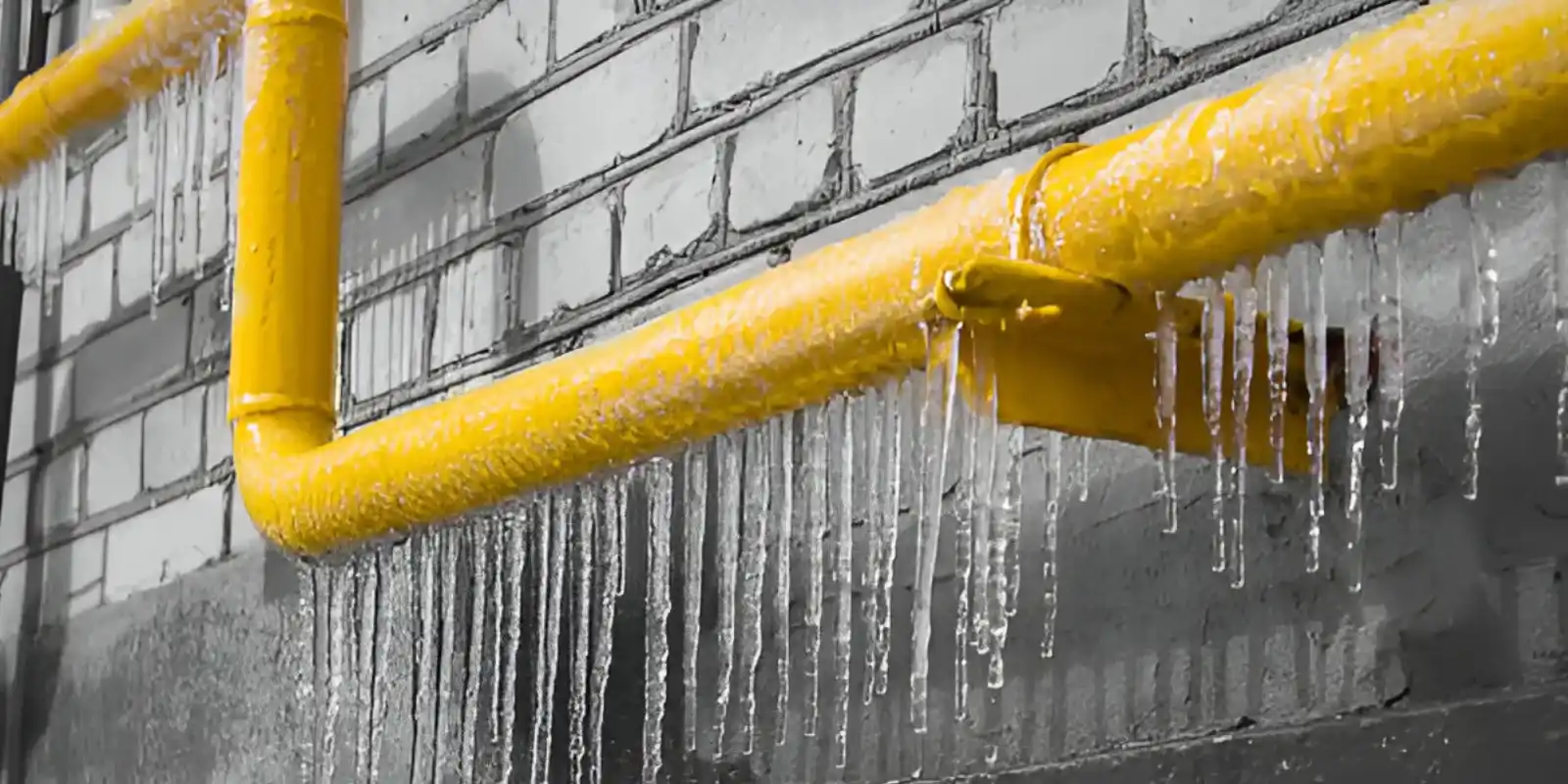
Prevent burst pipes by keeping your home heated, insulating exposed pipes, and protecting outdoor faucets before cold weather hits. Seal drafts near plumbing, disconnect hoses, and let vulnerable faucets drip slightly during severe cold. These steps keep water moving and pipes warm enough to avoid freezing and cracking.
Freezing weather puts real strain on home plumbing. Pipes are more likely to freeze when they sit in cold air or run through poorly heated spaces like garages, crawl spaces, or exterior walls. A frozen pipe doesn’t always burst, but it needs quick, careful attention before pressure builds and cracks the pipe wall.
This guide walks through how to protect your plumbing before winter arrives, what to do during a hard freeze, and how to respond safely if a pipe freezes or bursts. You’ll learn which pipes face the highest risk, how insulation and steady heat work together, and when it’s time to call a licensed plumber.
Why Do Pipes Freeze and Burst?
Water inside a pipe can freeze when the surrounding air turns cold enough for long enough. As ice forms, it can block the normal flow of water through the pipe.
Water also expands as it freezes. When ice blocks a pipe and a fixture on the other end stays closed, pressure can build up between the blockage and that closed point. This buildup is what leads to a break.
The pipe often splits at a weak point, not necessarily right where the ice formed. A joint, a seam, or a thin section of pipe may give way under the pressure before the ice itself does.
Several things affect how much risk a pipe faces. These include the pipe material, its location, how well it’s insulated, whether cold air can reach it through gaps or leaks, and how long the cold spell lasts. No single outdoor temperature guarantees a pipe will freeze. Risk climbs during extended freezing weather, especially in spots where pipes sit exposed or unheated.
Which Pipes Are Most Likely to Freeze?
Some pipes face more risk than others because of where they sit and how much heat reaches them. Common higher-risk locations include:
- Pipes running through exterior walls
- Pipes in garages
- Crawl-space plumbing
- Attic plumbing
- Basement pipes near drafty windows or doors
- Pipes under sinks on outside walls
- Outdoor hose bibs
- Irrigation system connections
- Pipes in vacant or lightly heated buildings
Building design and local climate both shape how much danger these areas pose. A well-insulated crawl space in a mild region may see little risk, while the same layout in a colder area could freeze quickly. Every home is different, so treat this list as a starting point for your own inspection rather than a diagnosis.
How to Protect Pipes Before Cold Weather Arrives
Work through this checklist before freezing temperatures set in.
- Find exposed and vulnerable pipes in your home, including crawl spaces, attics, and garages.
- Insulate any pipes you can safely reach.
- Seal air leaks around pipe openings where doing so is safe and doesn’t block required ventilation.
- Disconnect garden hoses from outdoor faucets.
- Drain or protect outdoor faucets based on how they’re designed to be maintained.
- Follow the manufacturer’s instructions for winterizing irrigation systems.
- Repair or replace damaged pipe insulation.
- Locate your main water shutoff valve so you know where it is before an emergency.
- Fix any known drips or leaks, since a small leak now can turn into a bigger problem in freezing conditions.
- Arrange for someone to check on vacant properties regularly through the cold season.
Insulation slows down heat loss, but it doesn’t generate warmth on its own. Pipes still need some source of heat nearby to stay above freezing. Never place insulation, wraps, or any other material near heaters, exposed wiring, gas appliances, or open flames.
How to Insulate Water Pipes Safely
A few common materials help slow heat loss around pipes:
- Foam pipe sleeves, which slide over straight sections of pipe
- Fiberglass pipe wrap, often used around irregular shapes or fittings
- Approved heat cable or heat tape, which adds a small amount of warmth along the pipe
If you use electric heat cable, keep these points in mind:
- It must be approved for the specific pipe material and location.
- It must be installed exactly as the manufacturer describes.
- It should show no signs of damage, such as frayed or cracked sections.
- It shouldn’t overlap on itself unless the manufacturer’s instructions allow it.
- It should be kept away from water where the instructions call for that.
- It should be checked regularly for wear.
This guide doesn’t cover detailed electrical wiring steps. If your project involves wiring work or pipes hidden inside walls or ceilings, bring in a qualified professional to handle the installation.
What to Do When Freezing Weather Is Forecast
When a hard freeze is on the way, a few simple actions make a real difference:
- Keep your indoor heat running, even if you’re not home.
- Maintain a steady indoor temperature rather than letting it swing up and down.
- Open cabinet doors under sinks located on exterior walls so warm room air can reach the pipes.
- Keep interior doors open where it helps warm air circulate to colder rooms.
- Close the garage door if water lines run through the garage.
- Protect outdoor faucets using a cover or by draining them, depending on their design.
- Check on pipes in unheated areas like attics and crawl spaces.
- Follow any guidance issued by your local water utility or emergency services.
- Consider a small, controlled faucet drip only when it fits your specific plumbing layout.
A dripping faucetcan help relieve pressure in some situations, but it isn’t a fix on its own. Not every home needs every faucet running during a cold snap, and running water unnecessarily can waste it. Local water-conservation rules, your plumbing layout, and guidance from your utility should all factor into this decision.
Should You Let Faucets Drip?
This question doesn’t have a single right answer for every home. Letting a small amount of water move through a vulnerable line can relieve some pressure and lower the chance that ice forms into a solid blockage.
That said, a drip won’t prevent every freeze. Only the specific line at risk may need this step, not every faucet in the house. Both hot and cold lines can be worth considering, depending on how your plumbing is laid out.
Try not to waste water by leaving faucets running longer or wider open than necessary. Check with your local utility if you’re unsure about guidance in your area. A drip works alongside heat and insulation. It isn’t a replacement for either one.
How to Protect Outdoor Faucets and Hoses
Outdoor plumbing faces some of the highest risk in cold weather. Protect it by taking these steps:
- Disconnect garden hoses from all outdoor faucets.
- Drain hoses fully before storing them for the season.
- Close an interior shutoff valve for the outdoor line if your home has one.
- Drain the outdoor line itself if it’s designed for that process.
- Install an insulated faucet cover where it fits your setup.
- Check faucets for damaged washers or small leaks before cold weather sets in.
- Follow the manufacturer’s instructions if you have a frost-free faucet.
Frost-free faucets are designed to resist freezing, but they can still freeze if a hose stays connected, if the faucet was installed incorrectly, or if water can’t drain away properly. If you’re not familiar with your outdoor plumbing setup, avoid taking it apart yourself and ask a plumber to check it instead.
How to Protect Pipes in a Vacant Home
Vacant or lightly used properties need extra attention during freezing weather. Consider these steps:
- Leave the heat running at a safe, steady temperature rather than turning it off.
- Arrange for someone to check the property regularly through the cold season.
- Open selected cabinet doors to help warm air reach vulnerable pipes.
- Shut off and drain the plumbing only if the system and property are set up to allow it safely.
- Follow the requirements listed for any connected appliances or heating equipment.
- Consider hiring a professional to winterize the property properly.
Draining a system incorrectly can damage appliances, pumps, fire-sprinkler systems, boilers, or other connected equipment. Because every property’s plumbing and equipment setup differs, there’s no single draining process that works for every building.
How to Recognize a Frozen Pipe
A few signs can point to a frozen pipe:
- Little or no water coming from a faucet
- Frost visible on an exposed section of pipe
- A pipe that feels unusually cold to the touch
- Strange odors coming from a drain or faucet
- Unusual noises, such as banging or whistling, from the pipes
- Visible bulging or cracking along the pipe
Keep in mind that low water flow can come from other causes, not just freezing. Only inspect areas you can safely and easily access. Don’t open walls or ceilings to search for a frozen section unless you know what’s behind them.
What to Do If a Pipe Is Frozen
If you suspect a pipe has frozen, follow these steps:
- Shut off the water supply if you see any sign of damage or suspect a crack.
- Open the faucet connected to the frozen section so water and steam can escape as the ice melts.
- Warm the surrounding area gradually rather than all at once.
- Use safe indoor heat sources, warm towels, or a hair dryer on a low setting, if appropriate for the location.
- If the frozen section is accessible, start warming near the faucet end and work toward the blockage.
- Watch closely for leaks as the pipe thaws.
- Call a plumber if the frozen section is hidden inside a wall, appears damaged, or isn’t safe to reach.
Never use an open flame, a torch, a heat gun, or boiling water to thaw a pipe. Don’t leave a space heater unattended near the area, and never use electrical devices near standing water. Avoid striking the pipe to try to break up the ice, and don’t cut into walls without knowing what’s behind them.
A frozen pipe may already have a small crack, even if you can’t see it yet. Keep an eye out for water as the ice melts and the pipe returns to normal temperature.
What to Do If a Pipe Bursts
A burst pipe calls for quick, careful action:
- Shut off the main water supply as soon as it’s safe to do so.
- Turn off electricity to the affected area only, and only from a dry, safe location.
- Stay away from any standing water that’s near electrical outlets, panels, or appliances.
- Open a safe faucet to help relieve any remaining pressure in the system.
- Move furniture and belongings away from the water if you can do so safely.
- Call a licensed plumber to assess and repair the damage.
- Contact a qualified water-removal professional if flooding is significant.
- Take photos or notes of the visible damage for your records.
- Contact your insurance provider to ask about coverage.
If water is near an electrical panel, outlets, or appliances, leave the area right away and contact emergency services for guidance before returning.
Common Mistakes That Increase Frozen-Pipe Risk
Even careful homeowners can overlook a few common issues:
- Leaving garden hoses connected to outdoor faucets through winter
- Turning off all indoor heat to save money during a cold spell
- Ignoring pipes in garages or crawl spaces because they’re out of sight
- Blocking warm air from reaching sink plumbing by keeping cabinet doors closed
- Continuing to use heat tape or cable that shows signs of damage
- Assuming pipe insulation alone will keep pipes warm without any heat source
- Waiting until a pipe freezes to figure out where the main shutoff valve is
- Trying to thaw a pipe with an open flame
- Ignoring a small leak that appears after a pipe thaws
- Leaving a vacant property unchecked for weeks at a time
These are easy habits to fall into, especially during a busy season. Catching them early goes a long way toward keeping pipes safe.
When Should You Call a Plumber?
Bring in a licensed plumber when:
- A pipe has already burst.
- A frozen pipe is hidden behind a wall or ceiling.
- Your main shutoff valve doesn’t work properly.
- Water is near electrical outlets, panels, or appliances.
- A pipe looks bulged, cracked, or is actively leaking.
- Several fixtures in the home have no water at all.
- Your home has a boiler, fire-sprinkler system, well, or other complex plumbing.
- You can’t safely thaw a frozen pipe yourself.
- The same pipe keeps freezing year after year.
Repeated freezing often points to a bigger issue, such as missing insulation, a pipe that needs rerouting, or gaps that let cold air reach the plumbing. A plumber can identify a longer-term fix rather than a one-time patch.
Frequently Asked Questions
At what temperature do pipes freeze?
Water freezes at 32°F or 0°C, but pipes don’t automatically freeze the moment outdoor air hits that mark. How long the cold lasts, how well the pipe is insulated, wind exposure, the pipe’s location, indoor heat levels, and the building’s construction all play a role in whether a pipe actually freezes.
Does pipe insulation prevent freezing?
Insulation slows down how quickly a pipe loses heat, which helps reduce the risk of freezing. It doesn’t create warmth on its own, though. During a long or severe cold snap, a pipe still needs some nearby heat source to stay above freezing, even with good insulation in place.
Should I drip hot water or cold water?
This depends on which line in your home faces the most risk. There’s no single answer that fits every house, since plumbing layouts vary. It’s best to follow guidance from your local water utility or ask a licensed plumber which line makes sense for your specific setup.
Should I open cabinet doors during freezing weather?
Yes, opening cabinet doors under sinks on exterior walls can help warm room air reach the plumbing underneath. This is especially useful in kitchens and bathrooms along outside walls. If you open cabinets, keep any cleaning chemicals or supplies stored there out of reach of children and pets.
Can frost-free outdoor faucets freeze?
Yes, they can. Frost-free faucets are built to resist freezing, but they can still freeze if a garden hose stays attached, if water can’t drain away from the faucet properly, if the faucet was installed incorrectly, or if indoor temperatures near the faucet drop too low.
Can I use a space heater near frozen pipes?
Portable space heaters can help warm an area, but they carry real fire and electrical risks. Use one only according to the manufacturer’s instructions, placed on a stable, level surface, kept away from water and flammable materials, and never left running unattended in the room.
How can I prevent pipes from freezing while I am away?
Leave your heat running at a safe, steady temperature instead of shutting it off. Arrange for regular property checks, open cabinet doors near vulnerable pipes, and consider hiring a professional for proper winterization rather than following one generic draining procedure that may not fit your home.
Does homeowners insurance cover burst pipes?
Coverage depends on your specific policy, what caused the break, how well the home was maintained, indoor heat settings at the time, whether the property was vacant, and other policy conditions. Contact your insurance provider directly to understand what your particular policy covers.
Conclusion
Preventing burst pipes comes down to a handful of consistent habits. Keep steady heat running through your home, insulate pipes that sit in cold or exposed areas, and protect outdoor faucets and hoses before temperatures drop. Know where your main shutoff valve is located, and act carefully and safely if you ever discover a frozen or leaking pipe.
If you find a frozen, leaking, or burst pipe, El Paso Plumbing can inspect the problem and explain the repair options. Call (915) 285-0087 or request service online.