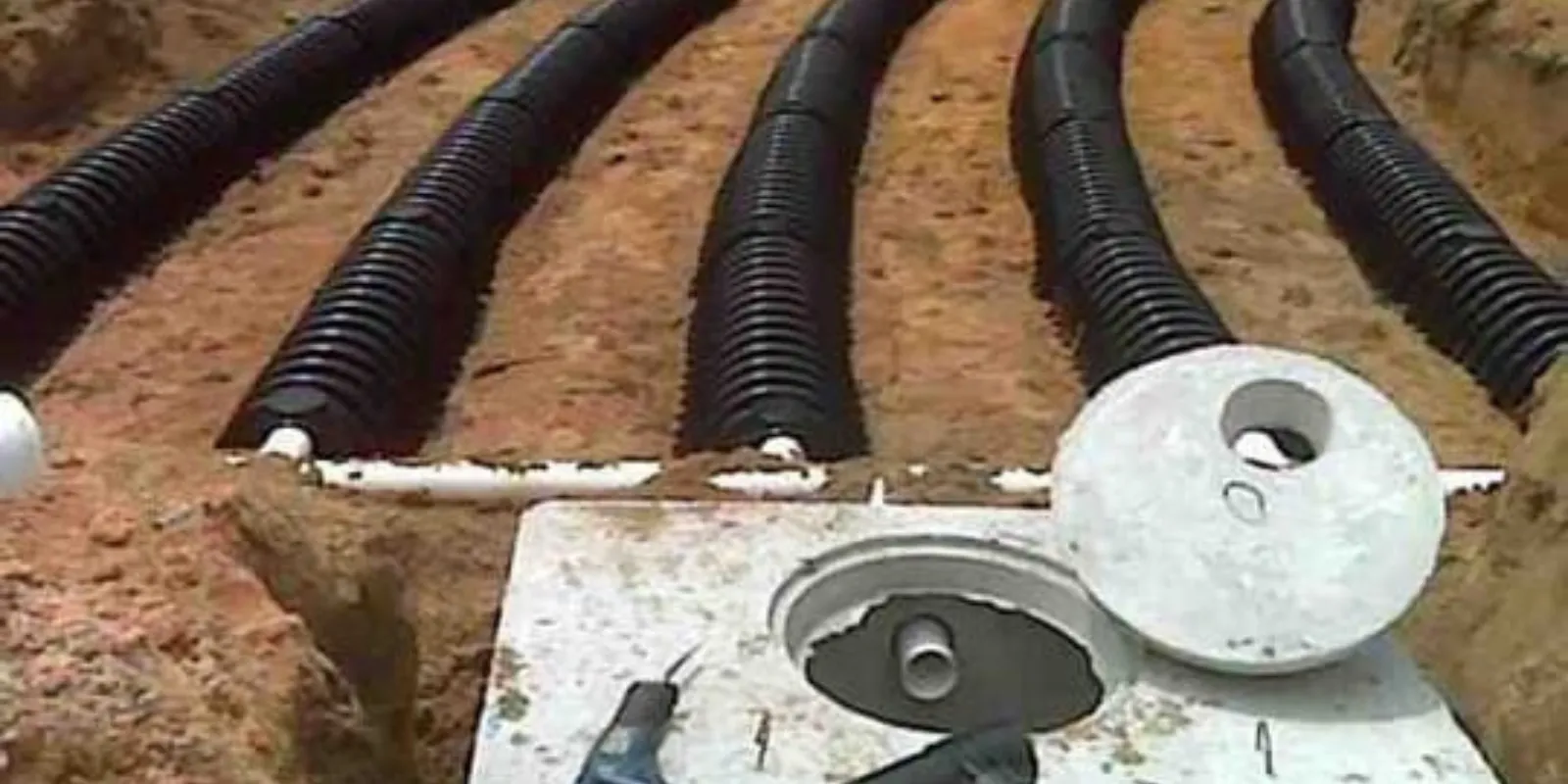
A leach field, also called a drain field, is the part of a septic system where wastewater from the septic tank is dispersed and naturally filtered through soil. It consists of perforated pipes buried in gravel-filled trenches, serving as the final treatment stage before water returns to the environment.
If your home isn’t connected to a municipal sewer system, a leach field is doing important, mostly invisible work every day. Understanding what it is and how it functions helps explain why certain maintenance habits matter and why some warning signs in your yard deserve immediate attention.
This article covers what a leach field is made of, how it fits into the larger septic system, what determines its lifespan, and the signs that indicate something’s gone wrong.
How a Leach Field Fits Into Your Septic System
A leach field doesn’t work alone. It’s the final stage in a two-part system that starts with the septic tank.
The Septic Tank’s Role
Wastewater from your home first flows into the septic tank, a sealed underground container where solid waste settles to the bottom as sludge and oils float to the top as scum. The liquid in between, called effluent, is what eventually moves on to the leach field.
The Leach Field’s Role
Once effluent leaves the septic tank, it flows into the leach field, where it’s dispersed through underground pipes and filtered naturally by the surrounding soil before rejoining the groundwater. This is where the actual treatment of the wastewater happens, since the septic tank primarily separates and begins breaking down solids rather than fully treating the liquid.
What a Leach Field Is Made Of
A leach field is a relatively simple system of buried components working together.
Perforated Pipes
The core of a leach field is a network of pipes with small holes along their length, allowing effluent to seep out gradually rather than all at once. These pipes are typically arranged in a series of parallel trenches spread across the field’s area.
Gravel-Filled Trenches
Each pipe sits in a trench filled with gravel, which helps distribute the effluent evenly along the pipe’s length and allows it to filter down into the soil below rather than pooling around the pipe itself.
The Surrounding Soil
The soil beneath and around the trenches performs the actual filtration, using natural bacteria and physical filtration to remove contaminants as the effluent percolates through it. This is why soil type has such a significant effect on how well a leach field performs.
The Distribution Box
In many systems, effluent first passes through a distribution box before reaching the leach field, which helps direct wastewater evenly to each trench or pipe run rather than overloading one section of the field.
Regional Naming Variations
Depending on where you live, this same component might be called a drain field, a soil absorption field, or a seepage field. These are all names for the identical part of a septic system, and the differences are regional terminology rather than functional distinctions, so don’t assume a different term means a different type of system.
How the Filtration Process Works
Understanding what actually happens underground helps explain why a leach field needs specific conditions to function properly.
Step One: Distribution
Effluent leaves the septic tank and, often via a distribution box, is directed evenly across the leach field’s network of pipes and trenches.
Step Two: Percolation
The effluent seeps out of the perforated pipes into the gravel, then gradually percolates, or trickles down, through the surrounding soil.
Step Three: Natural Filtration
As the effluent moves through the soil, naturally occurring bacteria and physical filtration remove contaminants, breaking down remaining organic material and filtering out pathogens before the water reaches the groundwater below.
Step Four: Groundwater Return
Once filtered, the water rejoins the natural groundwater system, completing the treatment process without ever needing to pass through a municipal treatment facility.
Why This System Works Without Electricity or Mechanical Parts
A conventional leach field relies entirely on gravity and natural soil filtration rather than pumps or mechanical components, which is part of why a properly functioning system is largely silent and low-maintenance day to day. This same simplicity is also why physical conditions like soil type and available space matter so much to how well the system performs over time, since there’s no mechanical process to compensate for poor site conditions.
Typical Leach Field Specifications
| Specification | Typical Range | Notes |
|---|---|---|
| Trench depth | 18 to 36 inches | Varies by soil type and local code |
| Distance from water sources | At least 50 feet | Required minimum from wells, lakes, or rivers in many areas |
| Spacing between trenches | Around 6 feet | Allows adequate soil filtration between lines |
| Field size | Varies significantly | Determined by household size, water usage, and soil type |
These figures reflect commonly cited general specifications and can vary based on local plumbing code and site-specific conditions.
What Determines a Leach Field’s Lifespan
A well-designed and properly maintained leach field can last a long time, though the range is fairly wide depending on several factors.
Typical Lifespan
Most sources place a properly functioning leach field’s lifespan somewhere between 20 and 30 years, with some systems lasting as long as 50 years under ideal conditions, and others needing replacement closer to 15 years under more demanding circumstances.
Soil Type
Sandy, well-draining soil generally supports a longer-lasting leach field than dense clay soil, which drains poorly and can lead to earlier saturation and system strain.
Household Water Usage
Higher water usage puts more demand on the leach field over time, since more effluent means more work for the soil’s filtration capacity. Households with high water use may see a shorter functional lifespan than smaller households with similar soil conditions.
Maintenance Frequency
Regular septic tank pumping, typically every three to five years depending on household size and usage, prevents solids from reaching and clogging the leach field. Consistent maintenance is one of the most significant factors within a homeowner’s control for extending the field’s lifespan.
Installation Quality
A properly sized and correctly installed leach field, matched appropriately to the property’s soil conditions and household needs, tends to perform better and last longer than a field installed without adequate site assessment.
Weather and Seasonal Conditions
Heavy rain, drought, and freezing temperatures can all affect a leach field’s performance and, over time, its lifespan. Prolonged wet conditions can saturate soil that’s already working near capacity, while extreme cold can affect how effectively the system processes wastewater in certain climates.
Field Size Relative to Household Needs
A leach field sized appropriately for the household it serves distributes effluent across enough soil area to avoid overloading any single section. A field that was undersized during original installation, or one serving a household that’s grown significantly since installation, can experience more strain and a shorter effective lifespan than a properly sized system.
Signs of Leach Field Problems
Recognizing early warning signs can help you address a developing issue before it becomes a larger, more expensive problem.
Standing Water or Soggy Ground
Wet, mushy grass or visible standing water above the leach field area, especially without recent rainfall, is one of the most common and noticeable signs of a struggling system.
Unusually Green or Fast-Growing Grass
Similar to signs of an underground water leak, an area of grass that’s noticeably greener or growing faster than the surrounding lawn can indicate effluent surfacing closer to ground level than it should.
Sewage Odor
A persistent sewage smell near the leach field area, rather than inside the home, often points to effluent that isn’t being absorbed and filtered properly by the surrounding soil.
Slow Drains Throughout the House
If multiple drains in your home are slow to empty, and the issue isn’t isolated to one fixture, it can indicate the septic system, including the leach field, isn’t processing wastewater efficiently.
Sewage Backup
A sewage backup into the home is one of the more serious signs of septic system failure and typically means the leach field, the septic tank, or both, need immediate professional attention.
Gurgling Drains or Toilets
A gurgling sound coming from drains or toilets, particularly when other fixtures are in use elsewhere in the home, can indicate air is struggling to vent properly through a septic system that’s under strain, which sometimes points back to a leach field nearing its capacity.
Common Causes of Leach Field Failure
A handful of underlying issues typically explain why a leach field stops working properly.
Tree Root Intrusion
Tree roots are drawn to the moisture found in and around leach field pipes and can grow into small openings, gradually clogging the perforations that allow effluent to disperse properly. [LINK: TREE ROOT INTRUSION PAGE] covers this issue in more detail as it relates to underground pipes generally.
Soil Saturation
Excessive water use, heavy rainfall, or poor natural drainage can saturate the soil around a leach field faster than it can filter and absorb effluent, leading to surfacing water and reduced treatment effectiveness.
Solids Reaching the Leach Field
When a septic tank isn’t pumped regularly, accumulated solids can eventually overflow into the leach field itself, clogging pipes and soil pores that were only designed to handle liquid effluent.
Compacted Soil
Heavy vehicles, structures, or excessive foot traffic over a leach field can compact the soil, reducing its ability to absorb and filter effluent effectively.
Harsh Chemicals or Excessive Grease
Chemicals that kill the beneficial bacteria responsible for breaking down waste, along with grease and oils that don’t break down easily, can disrupt the biological processes both the septic tank and leach field depend on.
System Age
Even with excellent maintenance, a leach field nearing the end of its typical lifespan naturally becomes more prone to failure as pipes, gravel, and the surrounding soil structure wear down over decades of continuous use. Age alone doesn’t guarantee failure, but it’s a factor worth weighing alongside other signs when deciding whether an aging system needs closer monitoring.
Maintaining a Healthy Leach Field
A few consistent habits help protect a leach field and extend its functional lifespan.
Schedule Regular Septic Tank Pumping
Routine pumping, typically every three to five years depending on household size and tank capacity, prevents solids from reaching the leach field and causing premature clogging.
Be Mindful of Water Usage
Spreading out heavy water use, like laundry loads, across the week rather than doing everything in one day helps avoid overwhelming the leach field’s absorption capacity all at once.
Avoid Planting Trees Nearby
Since tree roots are drawn to the moisture in and around leach field lines, avoiding new tree plantings near the field helps prevent future root intrusion into the pipes.
Keep Heavy Vehicles and Structures Off the Field
Parking vehicles, building structures, or installing pools over a leach field can compact the soil or damage the pipes beneath it, so keeping this area clear protects the system’s long-term function.
Limit Harsh Chemicals
Reducing the use of harsh drain cleaners and chemicals that can kill beneficial bacteria helps preserve the natural treatment process both the septic tank and leach field rely on.
Use Water Efficiently
Fixing leaking fixtures promptly, choosing water-efficient appliances, and being generally mindful of excessive water use all reduce the ongoing volume of effluent the leach field needs to process, which supports its long-term function.
When to Call a Professional
Any signs of standing water, sewage odor, slow drains throughout the house, or a sewage backup call for a professional septic inspection rather than a wait-and-see approach. A septic professional can assess whether the issue is isolated to the leach field, the septic tank, or another part of the system, and recommend the right repair.
Regular septic system inspections, separate from routine pumping, can also catch developing issues with the leach field before they become visible signs in your yard, helping extend the system’s overall lifespan.
What a Professional Inspection Typically Covers
A thorough inspection generally includes checking the septic tank’s sludge and scum levels, assessing the leach field area for signs of saturation or surfacing effluent, and confirming that distribution components are directing wastewater evenly across the field. This combination helps a professional distinguish between an issue confined to the tank and one that’s affecting the leach field itself, which changes what kind of repair is actually needed.
Combining Routine Care With Professional Inspections
Building a Simple Maintenance Schedule
Keeping a record of when your septic tank was last pumped, along with any inspection dates, makes it easier to stay on top of the recommended three-to-five-year pumping interval rather than relying on memory alone. Many septic service companies will also send a reminder when your system is due, which can help you avoid the kind of delayed maintenance that puts extra strain on the leach field.
Frequently Asked Questions
What is the difference between a leach field and a drain field?
There isn’t one. A leach field and a drain field are two names for the same septic system component, the network of perforated pipes and gravel trenches that filter and disperse liquid wastewater into the soil. The terminology varies by region, but the function is identical.
How long does a leach field last?
Most properly maintained leach fields last between 20 and 30 years, with some lasting as long as 50 years under ideal soil and maintenance conditions. Poor soil drainage, high water usage, or infrequent septic tank pumping can shorten this lifespan considerably.
Can I plant grass over my leach field?
Yes, grass is generally the recommended ground cover for a leach field, since its shallow root system doesn’t threaten the pipes below and grass helps manage moisture at the surface. Trees and deep-rooted plants should be avoided due to root intrusion risk.
What are the first signs of leach field failure?
Standing water or unusually soggy ground above the field, a sewage odor outdoors, and unusually green or fast-growing grass over the field area are among the earliest visible signs. Slow drains throughout the house can also indicate a developing issue.
Can a failed leach field be repaired, or does it need full replacement?
It depends on the cause and extent of the damage. Some issues, like a partial clog or a specific damaged section, may be repairable, while widespread soil saturation or significant compaction sometimes requires installing a new leach field, occasionally in a different area of the property.
Why do some leach fields need to be relocated during replacement?
If the original field failed due to soil saturation, compaction, or reaching the natural limits of that specific soil area, reusing the exact same location may not solve the underlying problem. In these cases, a new leach field is sometimes installed in a different part of the property with better soil conditions, assuming space and local regulations allow it.
How much distance does a leach field need from a well or water source?
Many areas require a minimum distance of around 50 feet between a leach field and any water source, including wells, lakes, or rivers, though exact requirements vary by local code. Check your local health department’s specific regulations for your property.
Do I need a permit to install or replace a leach field?
In most areas, yes. A functioning leach field is typically a legal requirement for any home not connected to municipal sewer service, and installation or replacement generally requires a permit from the local health department.
Can I use a garbage disposal if I have a leach field?
Using a garbage disposal adds extra solid material to the septic tank, which can require more frequent pumping to prevent that material from reaching and clogging the leach field. Some septic professionals recommend limiting garbage disposal use or avoiding it altogether in homes with a septic system to reduce this added strain.
Getting Your Leach Field Inspected
If you’re noticing signs of a struggling leach field or want a routine inspection as part of your septic maintenance, El Paso Plumbing can assess your system and recommend the right next step. Call (915) 285-0087 or request service online to schedule an inspection.